Least Concern
Blue Emperor
Anax imperator
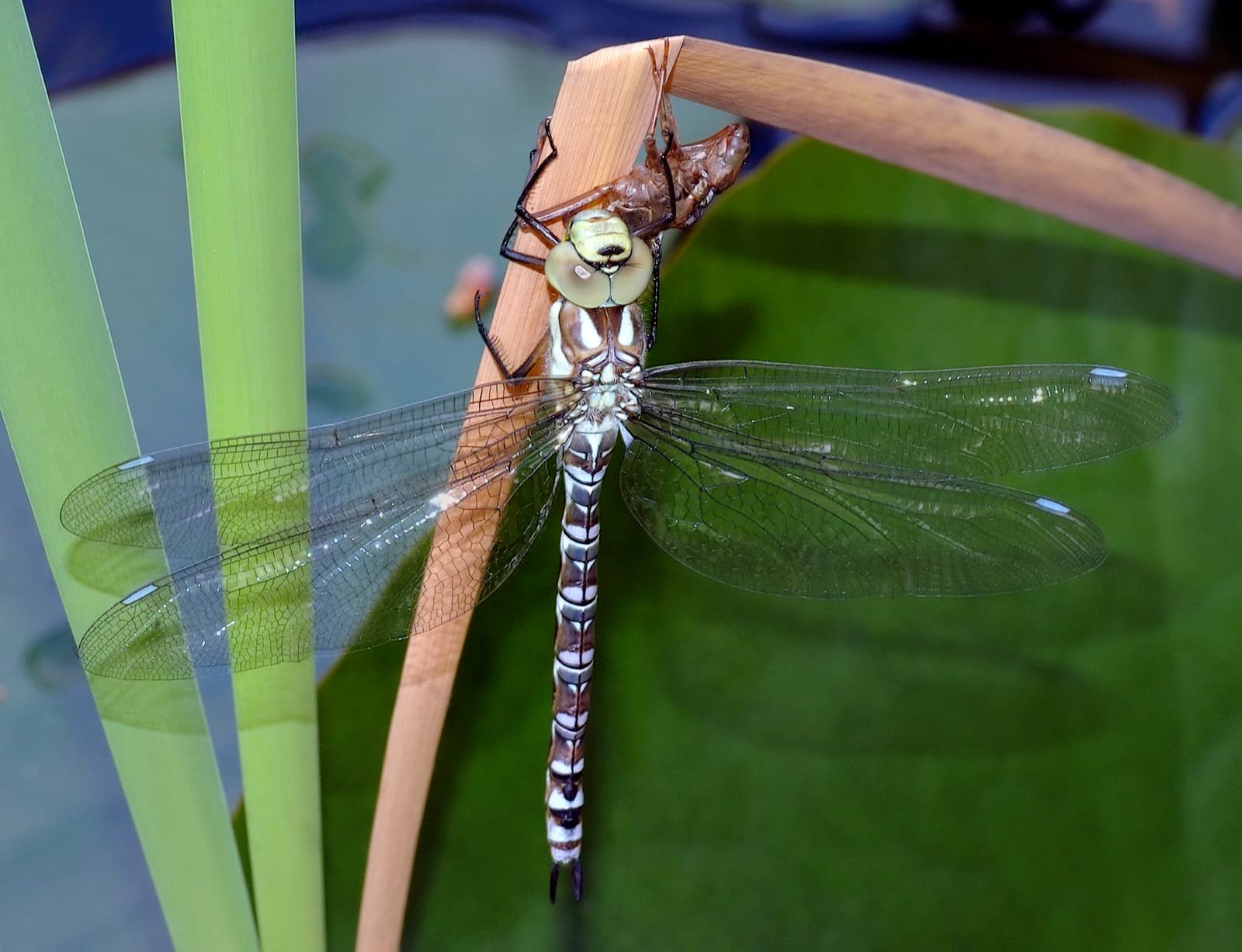
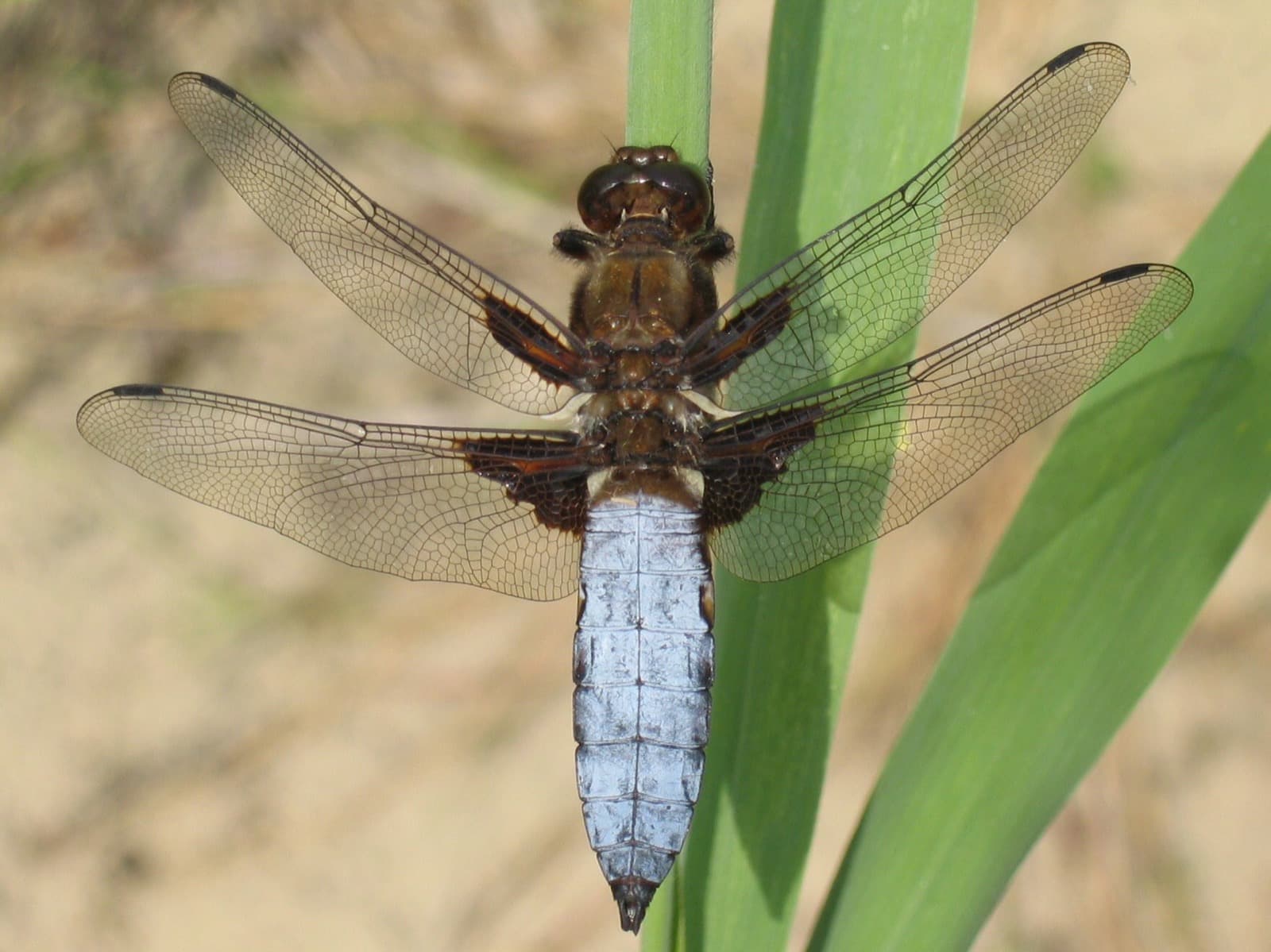
The Blue Emperor is one of Europe's largest and most impressive dragonflies, with a body length of up to 8.4 centimeters and a wingspan that can reach 11 centimeters. Males are particularly striking with their brilliant sky-blue abdominal segments and green eyes that gleam like jewels in sunlight.
Quartl (CC BY 3.0)
Learn together
Use this page to talk about conservation, habitat, and why each species matters.
Quick facts
Perfect for kids and families
⚖️Weight
0.6–1 g
⏳Lifespan
0.08–0.17 yrs
🍽️Diet
Insectivore
⚡Top speed
30 km/h
Mini challenge
What does Blue Emperor usually eat?
Try together before you keep scrolling
Pick an answer
Weight
0.6–1 g
Length
7–8.4 cm
Wingspan
9.5–11 cm
Top Speed
30 km/h
Lifespan
0.08–0.17 yrs
Diet
Insectivore
Listen to this species
Ljud
Distribution map
Utbredning
Adventure step • Meet the species
Overview
The Blue Emperor is one of Europe's largest and most impressive dragonflies, with a body length of up to 8.4 centimeters and a wingspan that can reach 11 centimeters. Males are particularly striking with their brilliant sky-blue abdominal segments and green eyes that gleam like jewels in sunlight. Females have more subdued coloring with greenish and tawny-brown tones, which helps them blend into vegetation when laying eggs. Both sexes have powerful, transparent wings with prominent veins and a characteristic black line along the wing edge. This magnificent insect is a master of the air and can reach speeds of up to 30 kilometers per hour. The Blue Emperor can fly in all directions – forward, backward, sideways, and even hover in mid-air like a helicopter. Its enormous compound eyes consist of up to 30,000 individual lenses and provide nearly 360-degree vision, making it a consummate hunter. It feeds on other flying insects such as mosquitoes, flies, butterflies, and even other dragonflies, which it catches with its spiny legs while in flight. The Blue Emperor undergoes a fascinating transformation during its life. It spends the majority of its existence – up to two years – as a larva (nymph) underwater. The larva is a feared predator in the pond, eating everything from aquatic insects to tadpoles and small fish. When ready to become an adult, the larva climbs up a plant stem above water, and the adult dragonfly emerges from the larval skin in a dramatic process that can take several hours. Newly emerged individuals are soft and pale but soon acquire their brilliant colors. During the summer months, males are highly territorial and aggressively patrol their areas around ponds and lakes, driving away rivals and pursuing females. A male may have a territory of up to 300 meters of shoreline. After mating, the female lays her eggs alone, either directly into the water or into aquatic plants, and can produce hundreds of eggs during the season. The Blue Emperor is an important indicator of healthy aquatic environments, and its presence suggests good water quality.
Adventure step • Where it lives
Habitat
WetlandLakeRiverGardenFarmlandGrassland
The Blue Emperor thrives best near larger, open bodies of water such as ponds, lakes, gravel pits, and slow-flowing streams. It prefers still or gently flowing water with abundant vegetation both in and around the water. The species' larvae need aquatic areas with soft bottoms where they can burrow, as well as plenty of aquatic plants that offer hiding places and hunting grounds. Adult individuals are often seen hunting along shorelines, over open water, and in sun-lit clearings, but they can also fly several kilometers away from water to hunt in forest edges, gardens, and meadows. The species' success in the Nordic region is partly due to its adaptability – it can establish itself in both natural and human-created aquatic environments. Garden ponds, park ponds, and even larger water bodies in industrial areas can host Blue Emperors, provided water quality is sufficiently good and suitable vegetation is present. It prefers warm, sunny locations and is particularly active during the warmest hours of the day. In Scandinavia, the species is most common in southern and central parts but has in recent years spread northward in line with climate change.
Adventure step • Through the seasons
Seasonal Behavior
In the Nordic region, the Blue Emperor flies mainly from June to September, with peak activity in July and August. The first adults typically emerge in late May or early June when water temperature rises. Males arrive at water first and establish their territories, while females often stay away from water for the first weeks after emergence to mature. Activity is greatest during warm, sunny days with little wind. Larvae overwinter in bottom sediment and are active predators even during colder months, albeit with slower metabolism. In southern Europe, the flight period can be considerably longer, from April to October.
Adventure step • Family life
Breeding
Offspring
200–600
Adventure step • Wild behavior
Behavior & Ecology
Activity Pattern
Diurnal
Social Behavior
Males are strongly territorial and aggressively defend their areas against other males.
Migration
Partial Migrant
Population
Common and stable population throughout its range
Did you know?
Blue Emperors can catch and eat their prey in mid-air – they're such skilled hunters that they succeed in capturing their target in 95% of their attacks!
They can see almost all the way around their head thanks to their gigantic eyes that cover most of their head.
A Blue Emperor can eat hundreds of mosquitoes in a single day – that's like eating 200 hamburgers!
The larva can live underwater for up to two years before becoming an adult dragonfly that only lives for a few months.
When two males meet in the air, they can fight so fiercely that it sounds like two pieces of paper being crumpled!
The Blue Emperor existed on Earth long before the dinosaurs – dragonflies have been around for over 300 million years!
They can fly backwards and sideways, and even stand completely still in the air – no other insect is as good at flying!
The larva's lower jaw can shoot out like a robotic arm to catch prey – it happens so fast that it takes less than a hundredth of a second!
Adventure step • Scientific place
Taxonomy
KingdomAnimalia
ClassInsecta
OrderOdonata
FamilyAeshnidae
SpeciesAnax imperator
No sources have been added yet.
Cite this page
Fun Wild Facts (2026) Blue Emperor (Anax imperator). https://www.funwildfacts.com/norden/insect/blue-emperor [May 30, 2026]
Similar animals
Least Concern
🦋 Insects
Brown Hawker
Aeshna grandis
0.5–1 g
0.08–0.25 yrs
WetlandLakeRiver+2
Least Concern
🦋 Insects
Migrant Hawker
Aeshna mixta
0.3–0.6 g
0.08–0.25 yrs
WetlandLakeRiver+3