Least Concern
Ross Seal
Ommatophoca rossii
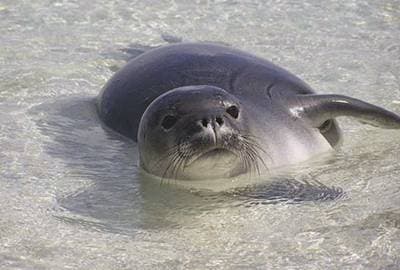
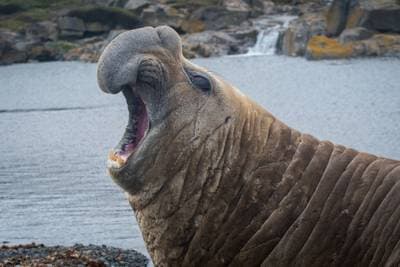
The Ross seal (Ommatophoca rossii) is one of the least known and most rarely observed seals in the world, endemic to the Antarctic pack ice and Southern Ocean. It is immediately recognizable by its disproportionately large eyes, which are the biggest relative to body size of any seal species, likely an adaptation for hunting in the dim light of deep water.
(c) Justin Hofman, some rights reserved (CC BY-NC) (CC BY-NC)
Learn together
Use this page to talk about conservation, habitat, and why each species matters.
Quick facts
Perfect for kids and families
⚖️Weight
129–216 kg
⏳Lifespan
15–25 yrs
🍽️Diet
Carnivore
🛡️Status
Least Concern
Mini challenge
What does Ross Seal usually eat?
Try together before you keep scrolling
Pick an answer
Weight
129–216 kg
Length
2–2.5 m
Lifespan
15–25 yrs
Diet
Carnivore
Listen to this species
Ljud
Distribution map
Utbredning
Adventure step • Meet the species
Overview
The Ross seal (Ommatophoca rossii) is one of the least known and most rarely observed seals in the world, endemic to the Antarctic pack ice and Southern Ocean. It is immediately recognizable by its disproportionately large eyes, which are the biggest relative to body size of any seal species, likely an adaptation for hunting in the dim light of deep water. The body is moderately slender, with a dark brownish-grey dorsal surface and a pale, cream-colored underside, often marked with dark streaks along the throat and sides. Ross seals feed primarily on squid, fish, and krill, diving to considerable depths to pursue prey. They are solitary and elusive animals that haul out alone on remote ice floes, making them exceptionally difficult to study. The species was named in honor of the British explorer Sir James Clark Ross, who led Antarctic expeditions in the 1840s.
Adventure step • Where it lives
Habitat
pack_iceOceanopen_ocean
Ross seals inhabit the dense Antarctic pack ice and surrounding open waters of the Southern Ocean, preferring remote, consolidated ice floes far from human activity. They are highly pelagic outside of the pupping season and are capable of deep dives in search of squid and fish.
Adventure step • Through the seasons
Seasonal Behavior
During the austral summer, Ross seals haul out on pack ice to pup, nurse their young, and molt, making them slightly more visible to researchers. In winter, they disperse into the open ocean and their movements and habitat use remain poorly understood due to the inaccessibility of their environment.
Adventure step • Family life
Breeding
Gestation
270 days
Offspring
1–1
Adventure step • Wild behavior
Behavior & Ecology
Activity Pattern
Diurnal
Social Behavior
Ross seals are among the most solitary of all pinniped species, almost always found alone on ice floes and rarely aggregating even during the breeding season. Brief encounters between individuals occur during mating, but otherwise they lead largely isolated lives across the vast Antarctic pack ice.
Migration
Nomadic
Population
The global population is estimated at approximately 130,000 individuals, though this figure carries considerable uncertainty due to the species' remote habitat and the difficulty of conducting systematic surveys. The Ross seal is considered the rarest of the four Antarctic true seal species.
Did you know?
The Ross seal has the largest eyes relative to body size of any seal species, an adaptation believed to aid hunting in the deep, dark waters beneath the Antarctic pack ice.
Ross seals produce a distinctive series of trilling and cooing vocalizations, which can sometimes be heard even through the ice — an unusual trait that sets them apart from other Antarctic seals.
Despite being formally described in 1844, the Ross seal remains one of the least studied large mammals on Earth due to the extreme remoteness of its pack ice habitat.
The Ross seal is the only member of its genus, Ommatophoca, making it a unique and evolutionarily distinct branch of the phocid seal family tree.
Adventure step • Scientific place
Taxonomy
KingdomAnimalia
ClassMammalia
OrderCarnivora
FamilyPhocidae
SpeciesOmmatophoca rossii
No sources have been added yet.
Cite this page
Fun Wild Facts (2026) Ross Seal (Ommatophoca rossii). https://www.funwildfacts.com/norden/mammal/ross-seal [February 28, 2026]
Similar animals
Least Concern
🦬 Mammals
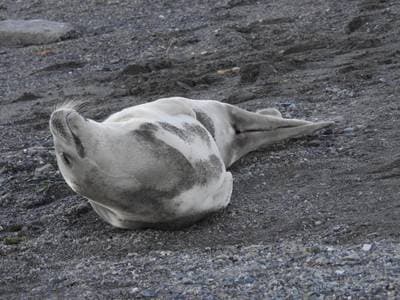
Crabeater Seal
Lobodon carcinophaga
200–300 kg
20–26 yrs
pack_iceOceanice
Least Concern
🦬 Mammals
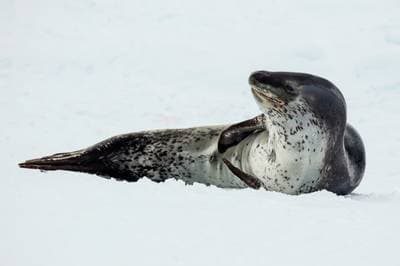
Leopard Seal
Hydrurga leptonyx
200–600 kg
12–26 yrs
pack_iceOceanCoast+1