Data DeficientCetaceans
Orca
Orcinus orca
The killer whale, or orca, is the largest member of the dolphin family and one of the ocean's most iconic animals, instantly recognizable by its striking black-and-white coloration. Males can reach up to 9.8 meters in length and weigh over 6,000 kg, while females are considerably smaller.
H. Zell (CC BY-SA 3.0)
Learn together
Use this page to talk about conservation, habitat, and why each species matters.
Quick facts
Perfect for kids and families
⚖️Weight
2700–6000 kg
⏳Lifespan
50–90 yrs
🍽️Diet
Carnivore
⚡Top speed
56 km/h
Mini challenge
What does Orca usually eat?
Try together before you keep scrolling
Pick an answer
Weight
2700–6000 kg
Length
5.5–9.8 m
Top Speed
56 km/h
Lifespan
50–90 yrs
Diet
Carnivore
Listen to this species
Ljud
Distribution map
Utbredning
Adventure step • Meet the species
Overview
The killer whale, or orca, is the largest member of the dolphin family and one of the ocean's most iconic animals, instantly recognizable by its striking black-and-white coloration. Males can reach up to 9.8 meters in length and weigh over 6,000 kg, while females are considerably smaller. They are apex predators of remarkable intelligence, hunting fish, squid, seals, sharks, and even large whales. Orcas employ sophisticated cooperative hunting strategies that vary between populations and are passed down through generations as cultural traditions. They communicate using a complex system of clicks, whistles, and pulsed calls that is unique to each pod. The species is found in all of the world's oceans but is most abundant in cold, productive waters near the poles.
Adventure step • Where it lives
Habitat
OceanCoast
Orcas inhabit all of the world's oceans from the Arctic to the Antarctic, preferring cold and productive coastal and offshore waters. They are highly adaptable and move according to prey availability in both coastal and deep oceanic environments.
Adventure step • Through the seasons
Seasonal Behavior
Many orca populations follow seasonal movement patterns tied to the migrations of their prey, such as salmon or herring runs. In Antarctic waters, pods often shift toward ice-free areas during winter months.
Adventure step • Family life
Breeding
Gestation
510 days
Offspring
1–1
Adventure step • Wild behavior
Behavior & Ecology
Activity Pattern
Diurnal
Social Behavior
Orcas live in stable, matrilineal family groups called pods led by older females, typically consisting of 5 to 30 individuals. Bonds between mothers and offspring are lifelong, and cultural knowledge including hunting techniques and vocalizations is transmitted within the group across generations.
Migration
Nomadic
Population
The global population is estimated at a minimum of 50,000 individuals, though precise numbers are difficult to determine. Some regional populations, such as those in the Northeast Atlantic, are well-studied and individually catalogued.
Did you know?
Orcas have no natural predators and sit at the very top of the marine food chain.
Each pod has its own unique dialect of calls that distinguishes it from other groups, a hallmark of animal culture.
Female orcas can live up to 90 years and undergo menopause, one of only a handful of non-human species known to do so.
Orcas in Patagonia have been observed intentionally beaching themselves to snatch seal pups from the shoreline, a technique taught to young calves.
Adventure step • Scientific place
Taxonomy
KingdomAnimalia
ClassMammalia
OrderArtiodactyla
FamilyDelphinidae
SpeciesOrcinus orca
No sources have been added yet.
Cite this page
Fun Wild Facts (2026) Orca (Orcinus orca). https://www.funwildfacts.com/norden/mammal/orca [February 26, 2026]
Similar animals
Least Concern
🦬 Cetaceans
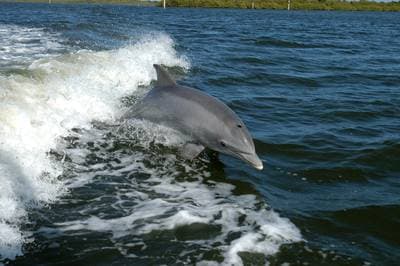
Common Bottlenose Dolphin
Tursiops truncatus
150–650 kg
20–60 yrs
OceanCoastReef
Least Concern
🦬 Mammals
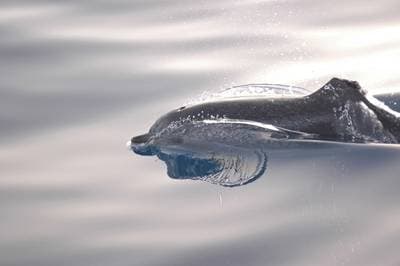
Atlantic spotted dolphin
Stenella frontalis
100–143 kg
25–30 yrs
OceanCoast