Least ConcernCetaceans
Common Bottlenose Dolphin
Tursiops truncatus
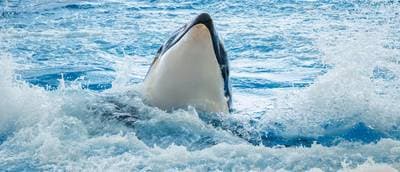
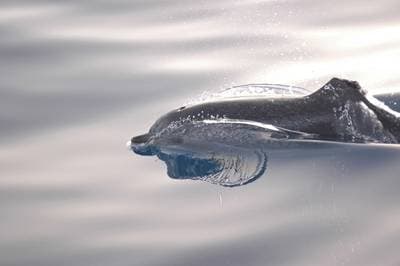
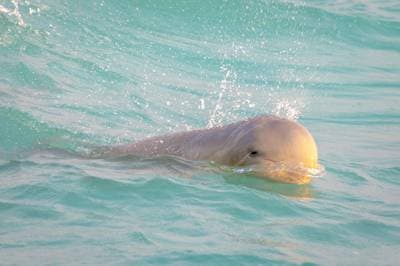
The common bottlenose dolphin is one of the most recognized cetaceans in the world, featuring a robust, streamlined body, a prominent rostrum, and a distinctive upward curve to the mouth that gives the appearance of a permanent smile. Their coloration follows a counter-shading pattern, dark gray on the dorsal side fading to lighter gray or white on the belly, providing camouflage in open water.
NASA (Public domain)
Learn together
Use this page to talk about conservation, habitat, and why each species matters.
Quick facts
Perfect for kids and families
⚖️Weight
150–650 kg
⏳Lifespan
20–60 yrs
🍽️Diet
Carnivore
⚡Top speed
55 km/h
Mini challenge
What does Common Bottlenose Dolphin usually eat?
Try together before you keep scrolling
Pick an answer
Weight
150–650 kg
Length
1.9–3.9 m
Top Speed
55 km/h
Lifespan
20–60 yrs
Diet
Carnivore
Listen to this species
Ljud
Distribution map
Utbredning
Adventure step • Meet the species
Overview
The common bottlenose dolphin is one of the most recognized cetaceans in the world, featuring a robust, streamlined body, a prominent rostrum, and a distinctive upward curve to the mouth that gives the appearance of a permanent smile. Their coloration follows a counter-shading pattern, dark gray on the dorsal side fading to lighter gray or white on the belly, providing camouflage in open water. These highly intelligent animals live in complex social groups and communicate through a rich array of clicks, whistles, and burst-pulse sounds. They use echolocation to navigate and locate prey such as fish, squid, and crustaceans with remarkable precision. Bottlenose dolphins are well known for their curiosity toward boats and humans, and have been observed using tools such as marine sponges to protect their rostrums while foraging on the seafloor. Cooperative hunting strategies, including herding fish against shorelines and creating mud rings, demonstrate their advanced problem-solving abilities.
Adventure step • Where it lives
Habitat
OceanCoastReef
Common bottlenose dolphins inhabit warm and temperate oceans worldwide, from shallow coastal lagoons, estuaries, and coral reefs to deeper offshore waters. They are highly adaptable and can be found in a wide range of marine environments.
Adventure step • Through the seasons
Seasonal Behavior
In temperate regions, some populations undertake seasonal movements toward warmer waters during winter months. Calving and mating peaks often occur in spring and summer, though timing varies by geographic location.
Adventure step • Family life
Breeding
Gestation
365 days
Offspring
1–1
Adventure step • Wild behavior
Behavior & Ecology
Activity Pattern
Diurnal
Social Behavior
Bottlenose dolphins live in fluid social units called pods, typically ranging from 2 to 15 individuals, though larger aggregations of hundreds can form. They maintain strong social bonds through play, cooperative hunting, and extensive vocal communication.
Migration
Partial Migrant
Population
The global population is estimated to exceed 600,000 individuals across all subspecies and populations. The species is listed as Least Concern (LC) on the IUCN Red List, though some localized populations face threats from habitat degradation and fisheries bycatch.
Did you know?
Each bottlenose dolphin develops a unique signature whistle that acts like a personal name, used by other dolphins to address specific individuals.
They can dive to depths of around 300 meters and hold their breath for up to 7 minutes.
Bottlenose dolphins have one of the largest brain-to-body-size ratios of any non-human animal, reflecting their exceptional intelligence.
They sleep with only half their brain at a time, a process called unihemispheric slow-wave sleep, allowing them to remain conscious and continue breathing.
Adventure step • Scientific place
Taxonomy
KingdomAnimalia
ClassMammalia
OrderArtiodactyla
FamilyDelphinidae
SpeciesTursiops truncatus
No sources have been added yet.
Cite this page
Fun Wild Facts (2026) Common Bottlenose Dolphin (Tursiops truncatus). https://www.funwildfacts.com/norden/mammal/common-bottlenose-dolphin [February 26, 2026]