Least Concern
Arctic Lemming
Dicrostonyx torquatus
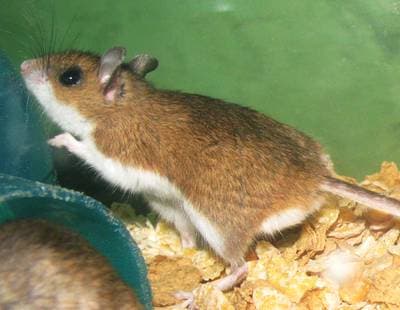
The Arctic lemming is a remarkable rodent perfectly adapted to life in the coldest and most inhospitable environments on Earth. This compact little creature, weighing between 30 and 112 grams and measuring 10-16 centimeters in length, has developed extraordinary strategies for surviving in the harsh Arctic tundra.
Imperatorskaia akademīia nauk (Russia); Middendorff, A. Th. von (Public domain)
Learn together
Use this page to talk about conservation, habitat, and why each species matters.
Quick facts
Perfect for kids and families
⚖️Weight
30–112 g
⏳Lifespan
1–2 yrs
🍽️Diet
Herbivore
🛡️Status
Least Concern
Mini challenge
What does Arctic Lemming usually eat?
Try together before you keep scrolling
Pick an answer
Weight
30–112 g
Length
10–16 cm
Lifespan
1–2 yrs
Diet
Herbivore
Listen to this species
Ljud
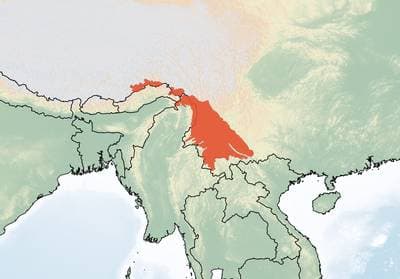
Distribution map
Utbredning
Adventure step • Meet the species
Overview
The Arctic lemming is a remarkable rodent perfectly adapted to life in the coldest and most inhospitable environments on Earth. This compact little creature, weighing between 30 and 112 grams and measuring 10-16 centimeters in length, has developed extraordinary strategies for surviving in the harsh Arctic tundra. Its name comes from the characteristic white or gray collar that many individuals display, particularly visible during their winter coat. The most extraordinary feature of the Arctic lemming is its ability to change color between summer and winter – a phenomenon exhibited by few mammals outside the hare and weasel families. During summer months, it wears a brownish-gray to reddish coat with darker patches, providing excellent camouflage among moss, lichen, and Arctic vegetation. As winter approaches, the Arctic lemming undergoes a dramatic transformation, acquiring a completely white coat that makes it nearly invisible against the snow. This color change is a vital defense against numerous predators including snowy owls, Arctic foxes, and ermines. The Arctic lemming has also developed a unique anatomical feature that distinguishes it from all other lemming species – during winter, two of the foreclaws grow into powerful, shovel-like tools. These specialized "winter claws" function as perfect implements for digging through hard-packed snow and ice, enabling the animal to navigate its winter landscape and build complex tunnel systems beneath the snow. In spring, these enlarged claws are shed and replaced by normal claws better suited for summer life. Despite its small size, the Arctic lemming plays a crucial role in the Arctic ecosystem. It serves as a primary food source for many predators, and the cyclical fluctuations of lemming populations affect the entire food chain from owls and falcons to foxes and ermines. When lemming populations are high, predators can raise larger litters, while poor lemming years can force these predators to seek alternative food sources or produce fewer offspring.
Adventure step • Where it lives
Habitat
TundraMountainGrasslandRocky Cliffs
The Arctic lemming lives exclusively in Arctic and subarctic environments across the entire northern hemisphere, from Scandinavia and northwestern Russia, through northern Siberia to North America and Greenland. In the Nordic region, it occurs mainly in the high alpine parts of northern Norway, Sweden's northernmost mountain areas, and Finland's Arctic regions. It prefers open tundra environments with good access to moss, grass, lichen, and low shrubs, but can also be found in rocky mountain areas and Arctic deserts where vegetation is extremely sparse. These small rodents are masters at exploiting microclimates and create their nests in sheltered locations under rocks, in cliff crevices, or beneath dense vegetation. During winter, the snow becomes their best protection – they build extensive tunnel systems in the insulating snow where the temperature can be 30-40 degrees warmer than outside. Here they can continue to be active and feed throughout winter without needing to hibernate, which is crucial because their high metabolism requires constant food intake.
Adventure step • Through the seasons
Seasonal Behavior
The lives of Arctic lemmings follow the Arctic seasonal cycle in a dramatic way. During the brief Arctic summer, when the midnight sun shines around the clock, they are extremely active and lively. This is the breeding season when females can have several litters in quick succession to maximize reproduction during the short favorable season. As autumn approaches, the white winter coat begins to grow in and the specialized winter claws develop. Winter is the season of survival – beneath the thick snow cover they continue their lives in a network of tunnels, feeding on stored plant parts, seeds, and bark nutrition. Spring brings another transformation as the white coat is replaced by summer colors and winter claws are shed, ready for a new cycle of intense activity and reproduction.
Adventure step • Family life
Breeding
Gestation
20 days
Offspring
3–8
Adventure step • Wild behavior
Behavior & Ecology
Activity Pattern
Cathemeral
Social Behavior
Arctic lemmings are primarily solitary animals that only seek out conspecifics during mating season. Females defend their territories aggressively, especially when they have young.
Migration
Resident
Population
Stable and widespread population across the Arctic, with cyclical fluctuations every 3-5 years
Did you know?
The Arctic lemming is one of the few mammals that changes color between seasons – from brownish-gray in summer to snow-white in winter!
During winter, two of its front claws grow into enormous "shovels" used for digging in snow and ice, then shed in spring.
These small rodents can have up to 3-4 litters per year with 3-8 young each, causing populations to explode during favorable years.
Arctic lemmings can be active both day and night, since the Arctic summer never gets dark and winter lacks daylight.
Despite weighing only 30-112 grams, Arctic lemmings are incredibly tough and can survive temperatures down to -40°C.
Under the snow, they build complex tunnel systems with bedrooms, food storage, and toilet areas – like small underground cities!
Arctic lemmings eat their own droppings to extract maximum nutritional value from the sparse Arctic vegetation – a behavior called coprophagy.
When frightened, Arctic lemmings can emit high-pitched whistling sounds to warn other lemmings of danger.
Adventure step • Scientific place
Taxonomy
KingdomAnimalia
ClassMammalia
OrderRodentia
FamilyCricetidae
SpeciesDicrostonyx torquatus
No sources have been added yet.
Cite this page
Fun Wild Facts (2026) Arctic Lemming (Dicrostonyx torquatus). https://www.funwildfacts.com/norden/mammal/arctic-lemming [May 30, 2026]
Similar animals
Least Concern
🦬 Mammals
Brown Lemming
Lemmus trimucronatus
40–112 g
0.5–2 yrs
TundraGrasslandWetland+1
Least Concern
🦬 Mammals
Cactus Mouse
Peromyscus eremicus
11–24 g
1–2 yrs
DesertRocky CliffsGrassland+1