Least ConcernWoodpeckers
Grey-faced Woodpecker
Picus canus
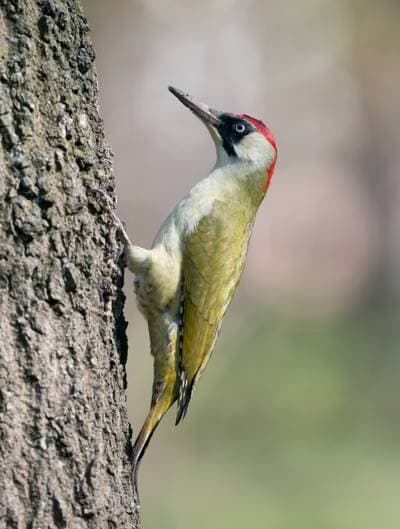
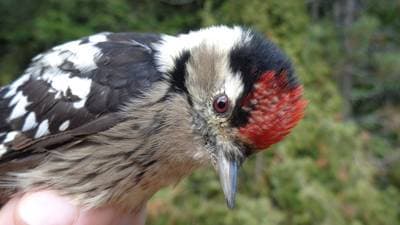
The Grey-faced Woodpecker is a medium-sized woodpecker distinguished by its grey-green plumage and characteristic grey face. Males have a red patch on the forehead, while females lack this red marking.
Didier Descouens (CC BY-SA 4.0)
Learn together
Use this page to talk about conservation, habitat, and why each species matters.
Quick facts
Perfect for kids and families
⚖️Weight
0.125–0.165 kg
⏳Lifespan
5–11 yrs
🍽️Diet
Insectivore
⚡Top speed
40 km/h
Mini challenge
What does Grey-faced Woodpecker usually eat?
Try together before you keep scrolling
Pick an answer
Weight
0.125–0.165 kg
Length
25–28 cm
Wingspan
38–44 cm
Top Speed
40 km/h
Lifespan
5–11 yrs
Diet
Insectivore
Listen to this species
Ljud
Distribution map
Utbredning
Adventure step • Meet the species
Overview
The Grey-faced Woodpecker is a medium-sized woodpecker distinguished by its grey-green plumage and characteristic grey face. Males have a red patch on the forehead, while females lack this red marking. Both sexes display a yellowish-green rump that is clearly visible in flight. With a length of 25-28 centimeters, the Grey-faced Woodpecker is somewhat smaller than the European Green Woodpecker but larger than the Lesser Spotted Woodpecker. Its bill is shorter and less robust than that of the Green Woodpecker, reflecting differences in foraging strategies. The Grey-faced Woodpecker thrives in mixed deciduous and coniferous forests, particularly where there are many trees with softer wood such as aspen, birch, and alder. Unlike many other woodpeckers, the Grey-faced Woodpecker spends much of its time on the ground searching for ants, which form a large part of its diet. It also shows a preference for forest areas near water and favors natural, open woodland environments over dense plantations. During spring, the male's persistent call 'kew-kew-kew-kew' that gradually decreases in volume can be heard, a sound distinctly different from the Green Woodpecker's laughing call. During the breeding season, the Grey-faced Woodpecker excavates its nest hole in dead or dying trees, often at relatively low heights between 2-6 meters from the ground. Both male and female participate in the excavation work, which can take 2-4 weeks to complete. The female typically lays 5-9 white, glossy eggs that both parents incubate in turns. After hatching, the young are fed by both parents and leave the nest after approximately 23-27 days. The family often stays together for several weeks after the young have fledged. The Grey-faced Woodpecker has a large distribution range extending from Scandinavia through Russia to eastern Asia, Japan, and China. In the Nordic countries, it is relatively common in Sweden and Finland but more scarce in Norway. The population is relatively stable, although the species is sensitive to intensive forestry that removes dead trees and reduces the availability of ant nests. The Grey-faced Woodpecker plays an important ecological role by creating nest holes that are later used by many other species such as starlings, flycatchers, and tits.
Adventure step • Where it lives
Habitat
ForestWoodlandTaigaMountainGarden
The Grey-faced Woodpecker prefers mixed deciduous and coniferous forests with a varied tree composition where aspen, birch, alder, and pine dominate. It thrives particularly well in mature forests with dead and dying trees where it can excavate nest holes and find insects. Unlike the Green Woodpecker, which is more tied to deciduous woodland, the Grey-faced Woodpecker manages well even in more northern taiga forests. The species has a strong preference for forest areas near water such as streams, small lakes, and marshes, where it often finds good conditions for ant colonies. More open woodland with glades and ant nests are ideal hunting grounds for the Grey-faced Woodpecker. It avoids dense spruce plantations and prefers naturally varied forests with both open areas and wooded sections. In cultivated landscapes, it can sometimes be seen in parks and large gardens if conditions are right. Up to the mountain forest limit, the Grey-faced Woodpecker can be found, but it is most common in lowland and mid-elevation forest areas. The availability of suitable nesting trees and abundant ant populations is crucial for where the Grey-faced Woodpecker establishes itself.
Adventure step • Through the seasons
Seasonal Behavior
The Grey-faced Woodpecker is a partial migrant in the Nordic region, where the population in northern Sweden and Finland partly migrates south during winter while southern populations are usually resident. Spring begins with intensive territorial activity from March to May, when the male's characteristic song echoes through the forests. Breeding occurs from April to June, with egg-laying usually in early May. During late summer, family groups disperse and juveniles establish their own territories. In winter, the Grey-faced Woodpecker is quieter and more withdrawn but can still be seen at ant nests and in forest edges. During cold winters, northern birds move to southern Scandinavia where food availability is better.
Adventure step • Family life
Breeding
Incubation
14 days
Offspring
5–9
Adventure step • Wild behavior
Behavior & Ecology
Activity Pattern
Diurnal
Social Behavior
The Grey-faced Woodpecker is mostly a solitary bird outside the breeding season. During breeding, they form monogamous pairs that together defend their territory.
Migration
Partial Migrant
Population
European population estimated at 1.7-3.0 million individuals, with approximately 25,000-50,000 pairs breeding in Sweden
Did you know?
The Grey-faced Woodpecker has an unusually long tongue that it can extend up to 10 centimeters to pick up ants from their tunnels!
Unlike most woodpeckers, the Grey-faced Woodpecker spends up to 90% of its foraging time on the ground searching for ants.
The male's 'song' consists of a series of soft 'kew' sounds repeated 10-20 times that slow down toward the end - one of the most easily identified sounds in the spring forest.
The Grey-faced Woodpecker drums much less than other woodpeckers because it prefers softer wood and spends more time searching for food on the ground.
A Grey-faced Woodpecker family can consume over 100,000 ants during a single breeding season!
In eastern Asia, the Grey-faced Woodpecker lives in mountain forests up to 4,000 meters elevation, making it one of the world's most high-altitude adapted woodpeckers.
The Grey-faced Woodpecker has fewer tail feathers than most other woodpeckers, making its tail less stiff - adapted for more ground movement.
The species is sometimes called the 'ant woodpecker' colloquially due to its extreme specialization on ants as food.
Adventure step • Scientific place
Taxonomy
KingdomAnimalia
ClassAves
OrderPiciformes
FamilyPicidae
SpeciesPicus canus
No sources have been added yet.
Cite this page
Fun Wild Facts (2026) Grey-faced Woodpecker (Picus canus). https://www.funwildfacts.com/norden/bird/grey-faced-woodpecker [May 30, 2026]
Similar animals
Least Concern
🦅 Woodpeckers
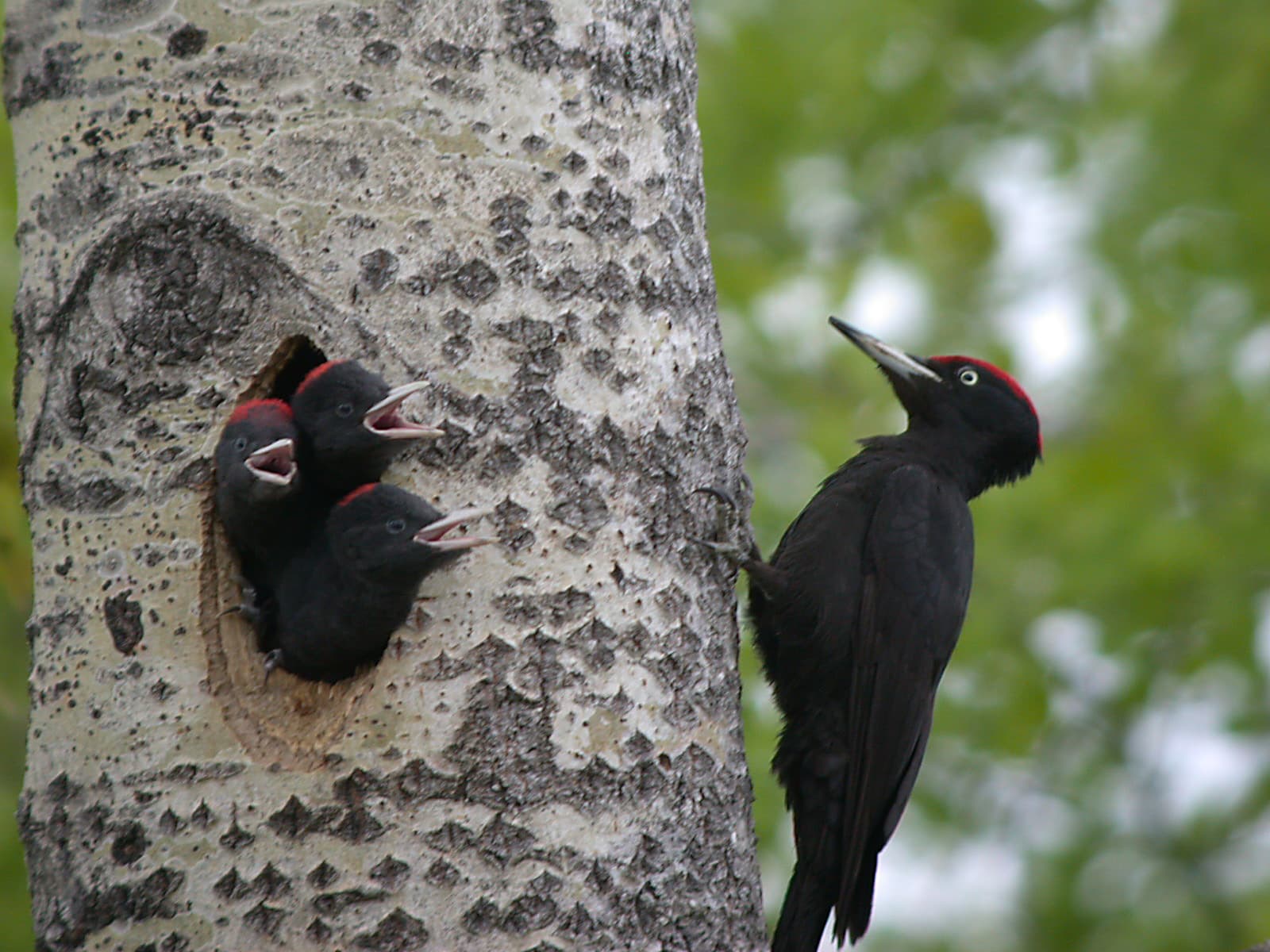
Black Woodpecker
Dryocopus martius
0.28–0.45 kg
5–14 yrs
ForestTaigaWoodland
Least Concern
🦅 Woodpeckers
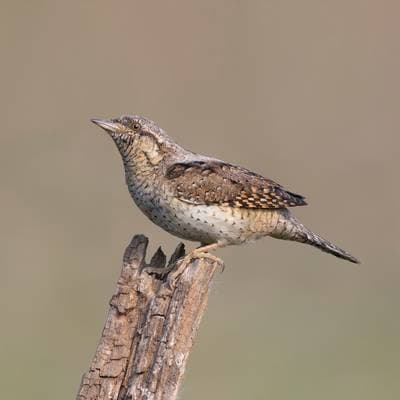
Eurasian Wryneck
Jynx torquilla
30–48 g
3–5 yrs
ForestWoodlandFarmland+3