Least Concern
Groundhog
Marmota monax
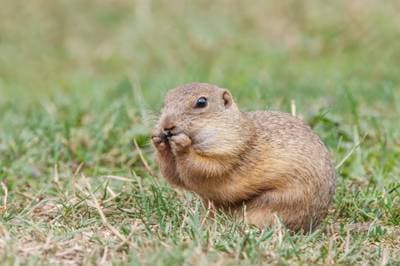
The groundhog, also known as woodchuck or whistle-pig, is a large ground-dwelling rodent belonging to the squirrel family. This stockily built animal has a broad, robust body covered in coarse fur that varies from grizzled grayish-brown to reddish-brown on the upperparts, with lighter underparts.
Cephas (CC BY-SA 3.0)
Learn together
Use this page to talk about conservation, habitat, and why each species matters.
Quick facts
Perfect for kids and families
⚖️Weight
2–6.3 kg
⏳Lifespan
2–6 yrs
🍽️Diet
Herbivore
⚡Top speed
16 km/h
Mini challenge
What does Groundhog usually eat?
Try together before you keep scrolling
Pick an answer
Weight
2–6.3 kg
Length
41–68 cm
Top Speed
16 km/h
Lifespan
2–6 yrs
Diet
Herbivore
Listen to this species
Ljud
Distribution map
Utbredning
Adventure step • Meet the species
Overview
The groundhog, also known as woodchuck or whistle-pig, is a large ground-dwelling rodent belonging to the squirrel family. This stockily built animal has a broad, robust body covered in coarse fur that varies from grizzled grayish-brown to reddish-brown on the upperparts, with lighter underparts. Their short, powerful legs are equipped with strong claws perfectly adapted for digging. With their rounded ears, short neck, and bushy tail that measures about one-quarter of their body length, groundhogs are easily recognizable when they stand upright on their hind legs to scan for danger. These skilled excavators create extensive underground burrow systems that can feature tunnels up to 14 meters long with multiple entrances and chambers. The burrow's architecture is impressive - it includes separate rooms for sleeping, toilet facilities, and hibernation. A main chamber is often located deep below the frost line, which is crucial for their winter hibernation. The groundhog is one of the few mammals that undergoes true hibernation, where body temperature drops from a normal 37°C down to just 3-4°C and heart rate decreases from 80 beats per minute to only 4-5 beats. Groundhogs are herbivorous animals that consume large quantities of green vegetation during the active season. They prefer wild grasses, clover, alfalfa, dandelions, and other herbs, but also eat fruits, berries, and occasionally bark. To prepare for the long winter, they must feed intensively during summer and early fall, often doubling their body weight. This fat reserve is their only energy source during the six months they may spend hibernating. They are diurnal and most active during early mornings and late afternoons, when they forage or sun themselves near their burrows. In North America, the groundhog has become part of popular culture thanks to Groundhog Day on February 2nd, a tradition where a groundhog supposedly predicts the arrival of spring. Despite sometimes being considered pests by gardeners and farmers due to their appetite for crops, they play an important ecological role. Their abandoned burrows are used by many other animal species, and their digging helps aerate and mix the soil, improving soil health.
Adventure step • Where it lives
Habitat
ForestWoodlandGrasslandFarmlandGardenUrban
The groundhog is widely distributed across eastern and central North America, from Alaska and Canada down to the northern parts of the United States, as far south as Alabama and Arkansas. They prefer open or semi-open environments such as meadows, pastures, forest edges, and agricultural areas where digging is easy and visibility is good. Their habitat is often characterized by well-drained soil on slopes or elevated areas to prevent flooding of their burrows. These adaptable rodents have successfully colonized suburban and urban areas, where they thrive along roadsides, railway embankments, parks, and even gardens. They prefer areas with low vegetation that provides food but sufficient visibility to detect predators such as foxes, coyotes, mountain lions, eagles, and domestic dogs. The groundhog's ability to adapt to human-dominated landscapes has made them a common sight in many parts of North America, even in densely populated areas.
Adventure step • Through the seasons
Seasonal Behavior
The groundhog's year is entirely governed by the seasons. They enter hibernation in October or November, depending on climate, and sleep deeply until March or April. Mating occurs almost immediately after they wake in spring, often while snow still covers the ground. After a gestation period of about one month, young are born in April or May. Summer and early fall are intensive feeding periods where both adults and young must build up fat reserves to survive the next winter. Juveniles from spring must nearly double their body weight before their first winter. The most active months are May through September, when they are seen daily at their burrows and in nearby feeding areas.
Adventure step • Family life
Breeding
Gestation
32 days
Offspring
2–6
Adventure step • Wild behavior
Behavior & Ecology
Activity Pattern
Diurnal
Social Behavior
Groundhogs are primarily solitary and territorial animals, especially adult males.
Migration
Resident
Population
Stable and abundant throughout their range
Did you know?
A groundhog can excavate 1.6 cubic meters of soil when building its burrow - that's about 318 kilograms of dirt!
During hibernation, a groundhog breathes only once every six minutes and briefly wakes up every three weeks.
The most famous groundhog is 'Punxsutawney Phil' who annually predicts spring's arrival on Groundhog Day before thousands of spectators.
Groundhogs can climb trees to escape predators - despite looking clumsy, they can actually climb up to 5 meters high!
They have special alarm calls for different dangers: a whistle for aerial predators and teeth chattering for ground predators.
A groundhog's front teeth grow continuously, about 1.5 mm per week, and must be worn down through constant gnawing.
An alternative name for the groundhog is 'whistle-pig' because of the high-pitched whistling sound they make when warning others of danger.
Newborn groundhogs weigh only about 26 grams and are completely helpless, blind, and hairless - but after just two months they're ready to leave their mother.
Adventure step • Scientific place
Taxonomy
KingdomAnimalia
ClassMammalia
OrderRodentia
FamilySciuridae
SpeciesMarmota monax
No sources have been added yet.
Cite this page
Fun Wild Facts (2026) Groundhog (Marmota monax). https://www.funwildfacts.com/nordamerika/mammal/groundhog [May 30, 2026]
Similar animals
Least Concern
🦬 Mammals
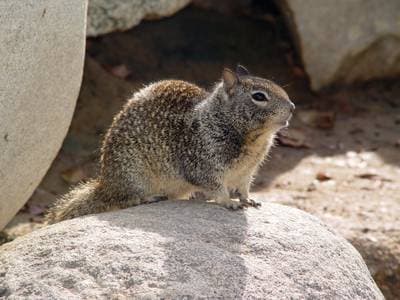
California Ground Squirrel
Otospermophilus beecheyi
0.28–0.74 kg
3–10 yrs
GrasslandWoodlandRocky Cliffs+3
Least Concern
🦬 Mammals
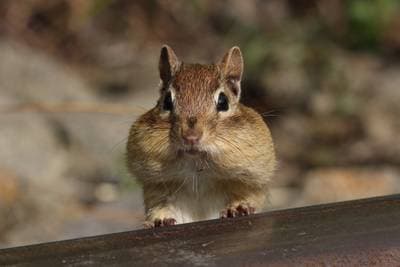
Eastern Chipmunk
Tamias striatus
66–125 g
2–8 yrs
ForestWoodlandGarden+2