Least Concern
dusky anchovy
Anchoa lyolepis
The dusky anchovy (Anchoa lyolepis) is a small silvery fish belonging to the anchovy family (Engraulidae). This species occurs in tropical and subtropical waters along the coasts of Central and South America, ranging from Mexico in the north to Ecuador in the south.
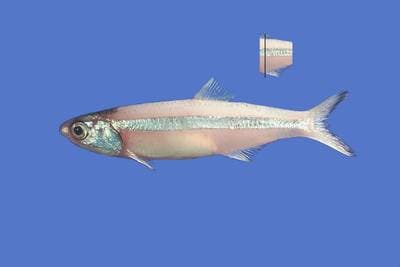
SEFSC Pascagoula Laboratory; Collection of Brandi Noble, NOAA/NMFS/SEFSC (Public domain)
Learn together
Use this page to talk about conservation, habitat, and why each species matters.
Quick facts
Perfect for kids and families
⚖️Weight
2–8 g
⏳Lifespan
1–2 yrs
🍽️Diet
Omnivore
🛡️Status
Least Concern
Mini challenge
What does dusky anchovy usually eat?
Try together before you keep scrolling
Pick an answer
Weight
2–8 g
Length
5–11 cm
Lifespan
1–2 yrs
Diet
Omnivore
Listen to this species
Ljud
Distribution map
Utbredning
Adventure step • Meet the species
Overview
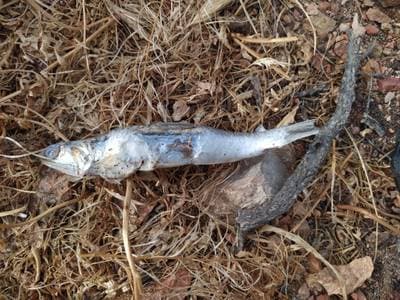
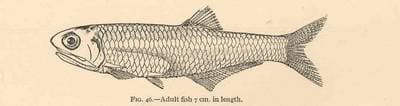
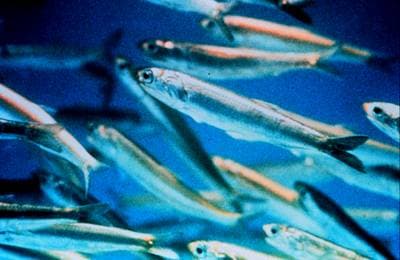
The dusky anchovy (Anchoa lyolepis) is a small silvery fish belonging to the anchovy family (Engraulidae). This species occurs in tropical and subtropical waters along the coasts of Central and South America, ranging from Mexico in the north to Ecuador in the south. The fish gets its name from its dark, almost blackish back coloration, which contrasts sharply with its silvery underside. With its slender body and large, protruding lower jaw, it is typical of its family. Dusky anchovies typically reach lengths of 7-9 centimeters, though the largest specimens can grow up to 11 centimeters long. The body is elongated and nearly transparent with a distinct silvery stripe along the side. The characteristic dark back provides excellent camouflage when viewed from above against the dark depths. The large eyes and powerful lower jaw are adaptations for efficiently capturing plankton and small crustaceans from the water. Like all anchovies, the dusky anchovy lives in large schools that can contain thousands of individuals. This behavior provides protection from predators by confusing them and making it difficult to focus on a single fish. The schools move in synchronized movements that resemble an underwater dance. The fish is an important part of the marine food web and serves as food for many larger fish, birds, and marine mammals. The dusky anchovy plays a significant role in local fisheries along the Pacific coast of Central and South America. It is often caught together with other anchovy species and is used both as fresh fish and for fishmeal production. In some areas, the fish is also popular as bait for sport fishing. Despite fishing pressure, populations are considered stable, although detailed population estimates for the species are lacking.
Adventure step • Where it lives
Habitat
OceanCoast
The dusky anchovy prefers shallow coastal waters and estuaries along the eastern Pacific coast of the Americas. The fish thrives in waters with temperatures between 20 and 28 degrees Celsius and typically stays at depths between 1 and 30 meters. It is especially common in protected bays, lagoons, and areas where freshwater from rivers meets seawater, creating nutrient-rich environments abundant with plankton. The species is strongly tied to coastal environments and rarely ventures into open ocean. During the day, schools often stay in deeper water or in the shade of mangrove trees and other structures, while in the evening and at night they move closer to the surface to feed on plankton. The mixing of salt and fresh water in estuaries creates perfect conditions for the small crustaceans and planktonic organisms that constitute the dusky anchovy's primary food source.
Adventure step • Through the seasons
Seasonal Behavior
The dusky anchovy spawns during the warmer part of the year, with peak spawning activity in spring and early summer when water temperatures are highest. Females release their eggs freely into the water where they are fertilized by males, and the eggs then drift freely with the currents. Within 24-48 hours, tiny larvae hatch and begin their lives as plankton. They grow rapidly and can reach sexual maturity at just 6-8 months of age. Because the fish lives in tropical and subtropical waters, seasonal variations are less pronounced than for fish in temperate zones, but the population still experiences peak levels during the spawning season.
Adventure step • Family life
Breeding
Offspring
1000–5000
Adventure step • Wild behavior
Behavior & Ecology
Activity Pattern
Diurnal
Social Behavior
Lives in large, dense schools that move synchronously through the water as protection against predators.
Migration
Resident
Population
Population not formally assessed but considered stable throughout its range
Did you know?
Dusky anchovies can form schools of over 100,000 individuals that move as a single organism!
The fish has the ability to change direction lightning-fast – an entire school can turn within a fraction of a second.
A female dusky anchovy can lay up to 5,000 eggs in a single spawning event during breeding season.
Dusky anchovy larvae are almost completely transparent, making them nearly invisible in the water.
The fish can filter up to 50 liters of water per hour through its gills when hunting plankton.
The dusky anchovy's name comes from its dark back, which can appear almost black in certain lighting conditions.
Large schools create whirlpools in the water that can be seen from the surface when they hunt plankton.
The fish uses its protruding lower jaw like a scoop to capture plankton more efficiently.
Adventure step • Scientific place
Taxonomy
KingdomAnimalia
ClassActinopterygii
OrderClupeiformes
FamilyEngraulidae
SpeciesAnchoa lyolepis
No sources have been added yet.
Cite this page
Fun Wild Facts (2026) dusky anchovy (Anchoa lyolepis). https://www.funwildfacts.com/nordamerika/fish/dusky-anchovy [May 30, 2026]