Least Concern
Dusky Salamander
Desmognathus fuscus
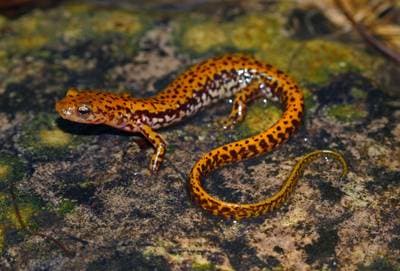
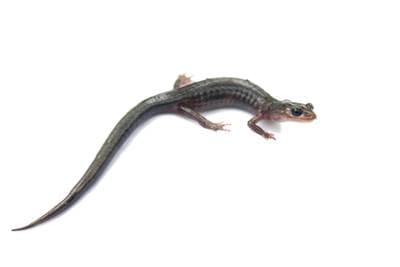
The Dusky Salamander (Desmognathus fuscus) is a medium-sized amphibian native to eastern North America, ranging from southern Canada to northern Florida. This salamander belongs to the lungless salamander family (Plethodontidae), meaning it breathes entirely through its thin, moist skin rather than with lungs.
Stanley Trauth (CC BY-SA 2.5)
Learn together
Use this page to talk about conservation, habitat, and why each species matters.
Quick facts
Perfect for kids and families
⚖️Weight
2–8 g
⏳Lifespan
5–10 yrs
🍽️Diet
Insectivore
🛡️Status
Least Concern
Mini challenge
What does Dusky Salamander usually eat?
Try together before you keep scrolling
Pick an answer
Weight
2–8 g
Length
7–14 cm
Lifespan
5–10 yrs
Diet
Insectivore
Listen to this species
Ljud
Distribution map
Utbredning
Adventure step • Meet the species
Overview
The Dusky Salamander (Desmognathus fuscus) is a medium-sized amphibian native to eastern North America, ranging from southern Canada to northern Florida. This salamander belongs to the lungless salamander family (Plethodontidae), meaning it breathes entirely through its thin, moist skin rather than with lungs. The species gets its common name from its dark coloration, which varies from brown to grayish, often with irregular spots or marbling along the back. Adults reach lengths of 7-14 centimeters (3-5.5 inches), including the tail. One of the most fascinating features of this salamander is its remarkable ability to regenerate lost body parts, including the tail and even portions of limbs. Males and females show slight sexual dimorphism - males develop more robust jaws and display a light line along the hind leg during breeding season. The species undergoes an interesting metamorphosis from larval stage to adult, with larvae living entirely aquatic lives for their first few months before transitioning to a more terrestrial existence. Desmognathus fuscus plays an important ecological role as both predator and prey. It actively hunts small invertebrates including earthworms, insect larvae, spiders, and slugs. At the same time, the salamander serves as food for many birds of prey, snakes, and small mammals. The species is particularly sensitive to pollution and environmental changes because it breathes through its skin and is directly exposed to contaminants in water and soil. Although the species remains relatively common throughout much of its range, some populations are threatened by habitat destruction, water pollution, and climate change. Salamanders are especially vulnerable to desiccation and require moist environments to survive. Research on this species has contributed to our understanding of amphibian ecology, evolution, and the ongoing amphibian crisis affecting species worldwide.
Adventure step • Where it lives
Habitat
ForestWetlandRiverWoodland
Desmognathus fuscus primarily inhabits moist deciduous and coniferous forests near flowing streams in eastern North America. The species prefers areas with clear, cool brooks and spring seeps where it can find shelter under rocks, fallen logs, and leaf litter. During the day, the salamander hides in humid microhabitats to avoid desiccation, becoming more active at night and during rainy weather. The species is particularly common along mountain streams in the Appalachians where there are abundant rocky substrates and lush vegetation. During breeding season, females search for suitable egg-laying sites near water, often in moist cavities under rocks or in moss beds. Larvae live entirely in water and require oxygen-rich water with good water quality. Adult salamanders move between land and water depending on season and weather conditions. During dry periods, they retreat to deeper refuges near water sources where moisture levels remain high year-round.
Adventure step • Through the seasons
Seasonal Behavior
Desmognathus fuscus is most active during spring and fall when temperatures and moisture levels are optimal. The breeding season extends from early spring through late summer, with egg-laying occurring from May through August. Females deposit their eggs in clusters of 12-36 in moist cavities near water. During cold winter months, the salamander becomes inactive and seeks shelter deep under rocks or in soil cavities below the frost line. In summer, especially during dry periods, the species limits its activity to nighttime and remains hidden during the day to conserve body moisture. Larvae that hatch in early summer undergo metamorphosis during their first summer or fall, depending on when they hatched.
Adventure step • Family life
Breeding
Incubation
42 days
Offspring
12–36
Adventure step • Wild behavior
Behavior & Ecology
Activity Pattern
Nocturnal
Social Behavior
The species is mostly solitary and males are territorial, especially around favorable habitat and during breeding season. Aggressive interactions between males include biting and wrestling.
Migration
Resident
Population
Locally common with stable populations throughout much of its range
Did you know?
Dusky Salamanders breathe entirely through their skin and have no lungs at all - their smooth, moist skin functions as an efficient respiratory organ!
When frightened, the salamander can drop its tail which continues to wiggle, distracting predators while the salamander escapes - a new tail then grows back!
Each salamander has a unique spot pattern on its body, just like human fingerprints, which helps researchers identify individual animals.
Males can become very territorial and will bite other males that intrude on their territory - they use their strong jaws to defend their space.
The salamander cannot hear sounds in the air but is highly sensitive to vibrations in the ground and water, helping it detect both prey and predators.
During breeding season, the male performs a special dance and deposits a sperm packet on the ground that the female then picks up - no direct mating occurs!
Mothers guard their eggs for up to six weeks without eating, and she rotates the eggs regularly to prevent mold growth.
This salamander can live up to 10 years in the wild, which is remarkably long for such a small animal that weighs less than a postage stamp!
Adventure step • Scientific place
Taxonomy
KingdomAnimalia
ClassAmphibia
OrderCaudata
FamilyPlethodontidae
SpeciesDesmognathus fuscus
No sources have been added yet.
Cite this page
Fun Wild Facts (2026) Dusky Salamander (Desmognathus fuscus). https://www.funwildfacts.com/nordamerika/amphibian/dusky-salamander [May 30, 2026]
Similar animals
Least Concern
🐸 Amphibians
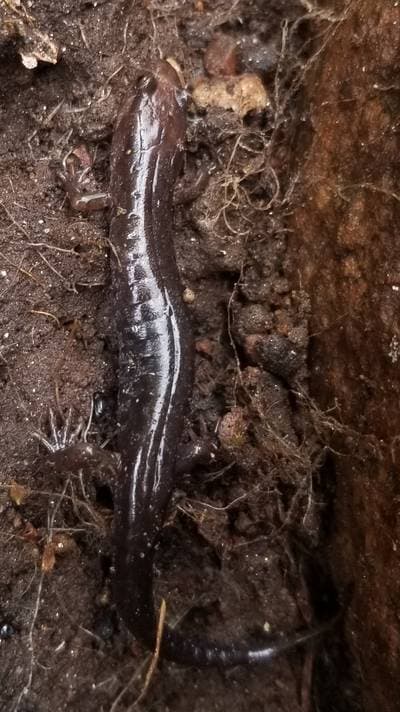
Carolina Mountain Dusky Salamander
Desmognathus carolinensis
2–6 g
5–10 yrs
ForestMountainRiver+1
Least Concern
🐸 Amphibians
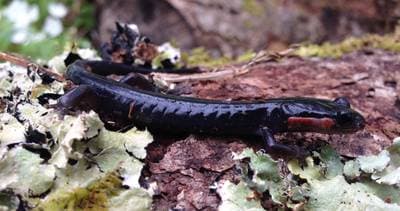
Jordan's Salamander
Plethodon jordani
2–6 g
8–25 yrs
ForestMountainWoodland+1