Least Concern
Viperine Snake
Natrix maura
The viperine snake is a fascinating water-loving serpent that has earned its name through its remarkable ability to mimic the appearance and behavior of venomous vipers. This harmless snake has evolved an impressive defensive system where it flattens its head, displays a zigzag pattern on its back, and even performs mock strikes – all to deter potential predators.
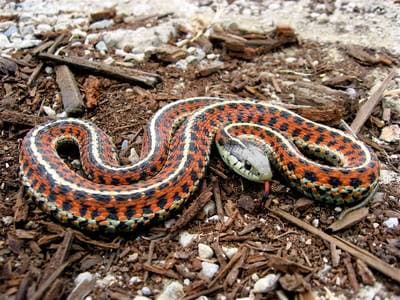
Christian Ferrer (CC BY-SA 4.0)
Learn together
Use this page to talk about conservation, habitat, and why each species matters.
Quick facts
Perfect for kids and families
⚖️Weight
50–250 g
⏳Lifespan
8–15 yrs
🍽️Diet
Omnivore
⚡Top speed
8 km/h
Mini challenge
What does Viperine Snake usually eat?
Try together before you keep scrolling
Pick an answer
Weight
50–250 g
Length
0.5–1 m
Top Speed
8 km/h
Lifespan
8–15 yrs
Diet
Omnivore
Listen to this species
Ljud
Distribution map
Utbredning
Adventure step • Meet the species
Overview
The viperine snake is a fascinating water-loving serpent that has earned its name through its remarkable ability to mimic the appearance and behavior of venomous vipers. This harmless snake has evolved an impressive defensive system where it flattens its head, displays a zigzag pattern on its back, and even performs mock strikes – all to deter potential predators. Despite its name and appearance, the viperine snake is completely harmless to humans and lacks venom. This species is a master swimmer and diver, spending most of its life in or near water. The viperine snake can remain submerged for up to 20 minutes and actively hunts fish, which is unusual among European snakes. With its large eyes and well-developed vision, it can track prey both above and below the water's surface. Its body is perfectly adapted for aquatic hunting, with a somewhat flattened tail that functions as an effective swimming fin. The viperine snake occurs mainly in southern Europe and North Africa, with the greatest presence on the Iberian Peninsula and in southern France. It thrives in a variety of aquatic environments – from calm ponds and marshes to fast-flowing streams and rivers. The species can also be found in brackish water along coastlines. Coloration varies considerably between individuals, from olive-green to brown or grayish, always with the characteristic zigzag pattern reminiscent of a viper. As an ectothermic animal, the viperine snake depends on the sun's warmth to regulate its body temperature. It spends morning hours basking on rocks or vegetation near water before beginning to hunt. During winter months, it hibernates in frost-free shelters such as rock crevices or deep hollows. Females lay their eggs in moist environments near water, where heat from decomposing plant material helps incubate the eggs.
Adventure step • Where it lives
Habitat
WetlandRiverLakeCoastGrasslandRocky Cliffs
The viperine snake is strongly tied to aquatic environments and is rarely found far from permanent or seasonal water. It prefers warm, sunny areas with good access to both water and basking spots. Typical habitats include river estuaries, ponds, canals, marshes, and slow-flowing watercourses. The species is particularly common in Mediterranean climates where it can utilize both freshwater and brackish water along coasts. The landscape surrounding the water is as important as the water itself. The viperine snake needs rocky shores, vegetation, and abandoned animal burrows to bask, hide, and overwinter. It is found from sea level up to approximately 2000 meters elevation in mountainous areas, but is most common in lowlands and at lower elevations. Human impact in the form of ponds, irrigation canals, and treatment facilities has sometimes created new suitable habitats for the species.
Adventure step • Through the seasons
Seasonal Behavior
The viperine snake is most active during the warm months from April to October, with peak activity during summer heat periods. Winter is spent in hibernation in frost-free shelters such as rock crevices, walls, or abandoned rodent burrows, often together with several other individuals. During spring and autumn, when temperatures are moderate, the snake is most active during the warmest hours at midday. During high summer, it adjusts its activity to avoid overheating and may be active even at dusk. The mating season typically occurs in April-May after hibernation, and eggs are laid in June-July in moist, warm environments where they hatch after about two months.
Adventure step • Family life
Breeding
Incubation
60 days
Offspring
4–25
Adventure step • Wild behavior
Behavior & Ecology
Activity Pattern
Diurnal
Social Behavior
The viperine snake is a distinctly solitary species that only seeks out conspecifics during the mating season. However, individuals tolerate each other at good basking sites and during hibernation.
Migration
Resident
Population
Stable population throughout most of its range, with local variations depending on habitat quality
Did you know?
The viperine snake is a harmless imposter that mimics viper appearance so perfectly that even experts are sometimes fooled!
It can stay underwater for up to 20 minutes while hunting fish – like a little snake submarine!
When threatened, it flattens its head into a triangular shape and hisses loudly, just like a real viper.
Unlike most snakes, the viperine snake is a skilled fish hunter that can catch prey underwater.
It can swim both forward and backward in water thanks to its flexible body and flat tail.
Females can lay between 4 and 25 eggs per clutch, depending on their size and health.
The viperine snake has a special defense: it secretes a very foul-smelling liquid from its anal glands when frightened – like a stink bomb!
Hatchlings are completely independent from birth and can begin hunting small fish and tadpoles immediately after hatching.
Adventure step • Scientific place
Taxonomy
KingdomAnimalia
ClassSquamata
OrderSquamata
FamilyColubridae
SpeciesNatrix maura
No sources have been added yet.
Cite this page
Fun Wild Facts (2026) Viperine Snake (Natrix maura). https://www.funwildfacts.com/europa/reptile/viperine-snake [May 30, 2026]
Similar animals
Least Concern
🦎 Reptiles
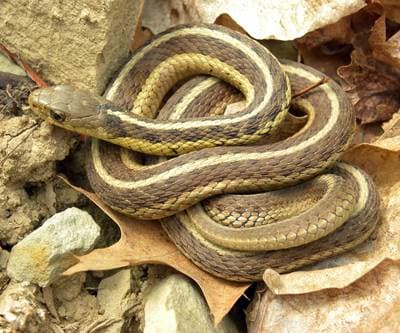
Common Gartersnake
Thamnophis sirtalis
35–150 g
3–10 yrs
WetlandForestGrassland+6
Least Concern
🦎 Reptiles
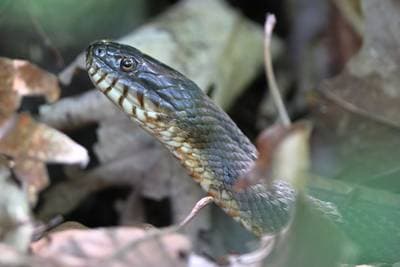
Common Watersnake
Nerodia sipedon
0.15–0.8 kg
8–10 yrs
WetlandRiverLake+2