Least Concern
Mediterranean Gecko
Hemidactylus turcicus
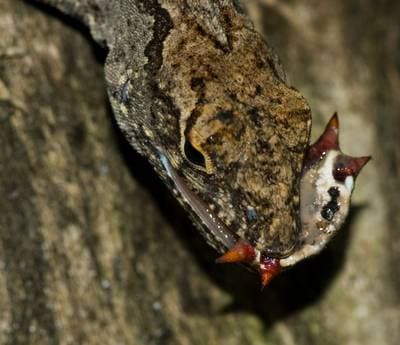
The Mediterranean gecko is a small, nocturnal lizard that has remarkably adapted to life alongside humans. With their pale grey or beige body, often adorned with spots or speckles, these geckos can reach lengths of 10-13 centimeters including the tail.
ZooFari (CC BY-SA 3.0)
Learn together
Use this page to talk about conservation, habitat, and why each species matters.
Quick facts
Perfect for kids and families
⚖️Weight
2–5 g
⏳Lifespan
3–8 yrs
🍽️Diet
Omnivore
🛡️Status
Least Concern
Mini challenge
What does Mediterranean Gecko usually eat?
Try together before you keep scrolling
Pick an answer
Weight
2–5 g
Length
4–13 cm
Lifespan
3–8 yrs
Diet
Omnivore
Listen to this species
Ljud
Distribution map
Utbredning
Adventure step • Meet the species
Overview
The Mediterranean gecko is a small, nocturnal lizard that has remarkably adapted to life alongside humans. With their pale grey or beige body, often adorned with spots or speckles, these geckos can reach lengths of 10-13 centimeters including the tail. Their most distinctive features are their large, expressive eyes with vertical pupils and specialized toe pads that enable them to climb almost any surface, even upside down on ceilings and windows. Originally native to the Mediterranean region, North Africa, and parts of the Middle East, the Mediterranean gecko has spread across the world through human commerce and transportation. Today they can be found in parts of the Americas, especially southern USA, Mexico, the Caribbean and South America, as well as certain parts of Oceania. They thrive in urban environments and are frequently spotted climbing on house walls, around street lights, and other illuminated areas where nocturnal insects congregate. These small geckos are masters at hunting insects. They use their large eyes to detect prey in low light conditions and can make quick, precise movements to catch flies, mosquitoes, moths, and other small insects. Their sticky toe pads contain millions of microscopic hairs that use van der Waals forces to adhere to surfaces, giving them incredible climbing abilities. The Mediterranean gecko is quiet compared to many other gecko species, but they can occasionally produce faint chirping or clicking sounds, especially during mating or territorial disputes. Females typically lay two round, hard-shelled eggs per clutch and can produce multiple clutches during a season. The eggs are often glued beneath loose bark, in crevices, or other protected locations where they hatch after approximately six to seven weeks.
Adventure step • Where it lives
Habitat
UrbanGardenRocky CliffsCoastDesertWoodland
The Mediterranean gecko prefers warm, dry climates and is most commonly found in areas with Mediterranean or subtropical conditions. In its natural range, it inhabits rocky environments, stone walls, trees, and cliff formations. However, the species has shown a remarkable ability to adapt to human settlements and is now most commonly found in urban and suburban environments. In cities and towns, Mediterranean geckos live on house walls, under eaves, in building crevices, around windows and doors. They are attracted to areas with artificial lighting because the light draws nocturnal insects that constitute their food. They are often seen crawling on walls near street lamps, porch lights, and other light sources. They also thrive in gardens, parks, and other green spaces in cities where they find hiding places under bark, in stone walls, or in tree cavities.
Adventure step • Through the seasons
Seasonal Behavior
The Mediterranean gecko is active year-round in warmer climates, but their activity level may decrease somewhat during colder months in areas with milder winters. In regions where temperatures drop significantly during winter, they may enter a state of reduced activity and spend more time hidden in sheltered nooks. The breeding season typically extends from early spring to late summer, with multiple clutches produced during this period. During the warmest summer months they are most active and visible, often seen hunting on walls and around light sources shortly after sunset.
Adventure step • Family life
Breeding
Incubation
45 days
Offspring
1–2
Adventure step • Wild behavior
Behavior & Ecology
Activity Pattern
Nocturnal
Social Behavior
Mediterranean geckos are primarily solitary animals that only seek companionship during the breeding season.
Migration
Resident
Population
Very common and stable population globally, classified as Least Concern
Did you know?
Mediterranean geckos can climb upside down on glass and other smooth surfaces thanks to microscopic hairs on their toes - each toe has over a million tiny hairs!
Unlike many lizards, geckos have no eyelids - instead they lick their eyes to keep them clean and moist with their long tongue!
They can drop their tail if attacked or grabbed, and the tail continues to twitch to distract predators while the gecko escapes.
The Mediterranean gecko is one of the few gecko species to establish large populations outside its native range by hitchhiking on ships and trucks.
Their eggs have hard shells just like bird eggs, unlike many other lizards that lay soft, leathery eggs.
A single Mediterranean gecko can eat hundreds of mosquitoes and other pest insects each night, making them excellent natural pest controllers!
They can change their skin color slightly between day and night - becoming lighter at night when active and darker during the day when resting.
Mediterranean geckos have excellent night vision thanks to specialized cells in their eyes that can capture even very little light.
Adventure step • Scientific place
Taxonomy
KingdomAnimalia
ClassSquamata
OrderSquamata
FamilyGekkonidae
SpeciesHemidactylus turcicus
No sources have been added yet.
Cite this page
Fun Wild Facts (2026) Mediterranean Gecko (Hemidactylus turcicus). https://www.funwildfacts.com/europa/reptile/mediterranean-gecko [May 30, 2026]
Similar animals
Least Concern
🦎 Reptiles
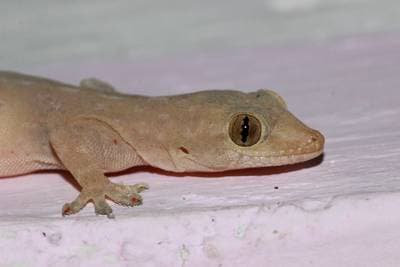
Common House Gecko
Hemidactylus frenatus
2–5 g
3–5 yrs
UrbanGardenForest+3
Least Concern
🦎 Reptiles
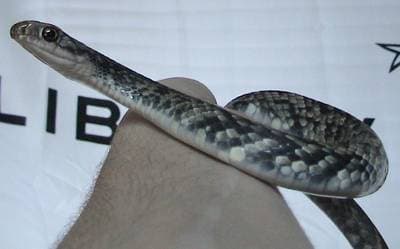
Black Racer
Coluber constrictor
0.15–0.6 kg
6–10 yrs
ForestGrasslandWoodland+4