Least Concern
Rakali
Hydromys chrysogaster
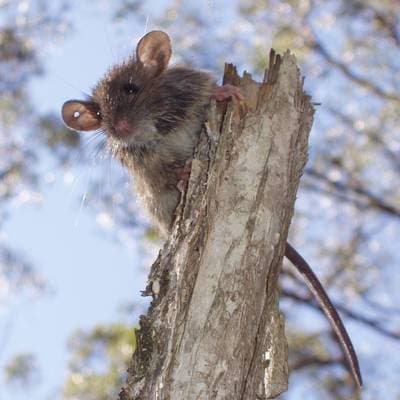
The rakali (Hydromys chrysogaster), also known as the Australian water rat, is Australia's largest aquatic rodent and one of the continent's most fascinating mammals. With its streamlined body, which can reach up to 39 centimeters in length, and muscular tail adding another 30 centimeters, the rakali is perfectly adapted for life in the water.
ZooPro (CC BY-SA 3.0)
Learn together
Use this page to talk about conservation, habitat, and why each species matters.
Quick facts
Perfect for kids and families
⚖️Weight
0.34–1.3 kg
⏳Lifespan
3–6 yrs
🍽️Diet
Herbivore
🛡️Status
Least Concern
Mini challenge
What does Rakali usually eat?
Try together before you keep scrolling
Pick an answer
Weight
0.34–1.3 kg
Length
24–39 cm
Lifespan
3–6 yrs
Diet
Herbivore
Listen to this species
Ljud
Distribution map
Utbredning
Adventure step • Meet the species
Overview
The rakali (Hydromys chrysogaster), also known as the Australian water rat, is Australia's largest aquatic rodent and one of the continent's most fascinating mammals. With its streamlined body, which can reach up to 39 centimeters in length, and muscular tail adding another 30 centimeters, the rakali is perfectly adapted for life in the water. Its fur is thick and water-repellent with a characteristic color - golden-brown to grayish on the upper side and white to yellowish on the belly. The name 'chrysogaster' comes from Greek meaning 'golden belly'. This remarkable animal has evolved extraordinary adaptations for its aquatic lifestyle. Its hind feet are partially webbed, making it an exceptional swimmer. The soft white whisker tufts on its snout function as sensitive tactile hairs that help the rakali locate prey in murky water. Unlike many other aquatic mammals, the rakali doesn't produce oil to keep its fur dry, but instead uses air pockets trapped in its dense underfur. When diving, you can see silvery air bubbles surrounding its body. The rakali is a skilled hunter that feeds on a varied selection of prey. Its menu includes fish, crustaceans like crayfish and mussels, aquatic insects, frogs, and sometimes even small birds. It has powerful jaws and strong teeth capable of cracking shells from mussels and crayfish. The rakali has fascinating feeding habits - it often takes larger prey to favorite spots along the shore, so-called 'feeding platforms', where it can eat in peace. These sites can be identified by piles of shells and fish bones. Although the rakali was once common in waterways across Australia, populations have declined dramatically in many areas over recent decades. Habitat loss, water pollution, and invasive species such as feral cats and red foxes threaten its survival. The animal is now considered vulnerable in some states. The rakali plays an important role in aquatic ecosystems by controlling populations of crayfish and fish, and its presence is often a sign of healthy aquatic environments.
Adventure step • Where it lives
Habitat
WetlandRiverLakeCoastMangroveForest
The rakali lives exclusively in or near freshwater and brackish water environments across Australia and southern Papua New Guinea. They prefer slow-flowing rivers, streams, ponds, lakes, wetlands, and mangrove forests with well-developed banks where they can dig their burrows. Ideal habitats have dense vegetation along the shores providing shelter and shade, as well as a rich supply of prey. Rakali can also be found in estuaries and coastal environments, where they often hunt in shallow waters for crayfish and fish. The animal constructs its burrows in river banks, often with entrances both above and below the waterline. The burrow is lined with grass, leaves, and other soft vegetation. Rakali are highly territorial and a pair may control a stretch of up to one kilometer along a waterway. They prefer areas with good water quality and avoid heavily polluted waters. In urban environments, rakali can sometimes be found in parks and golf courses with ponds, demonstrating their adaptability when habitat quality is good.
Adventure step • Through the seasons
Seasonal Behavior
Rakali are active year-round and show no hibernation behavior. Breeding can occur throughout the year in northern, warmer regions, but in southern Australia births are more concentrated in spring and summer (September to March) when food is most abundant. Females can have 2-3 litters per year under favorable conditions. During drought periods, rakali may be forced to travel longer distances to find suitable water bodies with sufficient food. In coastal areas, tides affect their hunting patterns - they are often most active during low tide when prey is easier to catch in shallow pools.
Adventure step • Family life
Breeding
Gestation
35 days
Offspring
1–7
Adventure step • Wild behavior
Behavior & Ecology
Activity Pattern
Nocturnal
Social Behavior
Rakali are primarily solitary and nocturnal, but pairs may share territory during breeding season.
Migration
Resident
Population
Population unknown but declining in many regions; listed as vulnerable in some states
Did you know?
Rakali can hold their breath underwater for up to a minute while hunting!
The name 'rakali' comes from an Aboriginal Australian people and has been used for thousands of years.
A rakali can crack open mussel shells as large as golf balls with its powerful jaws.
The rakali's tail functions as a rudder when swimming and helps it make quick turns underwater.
The white whisker tufts on a rakali's snout are so sensitive they can detect the slightest water movements from prey in total darkness.
Rakali build their burrows with two entrances - one below the waterline and one above - for safe escape!
A single rakali can eat up to 30 percent of its own body weight every night.
Unlike many other rodents, the rakali is an excellent example of convergent evolution with otters, despite not being closely related.
Adventure step • Scientific place
Taxonomy
KingdomAnimalia
ClassMammalia
OrderRodentia
FamilyMuridae
SpeciesHydromys chrysogaster
No sources have been added yet.
Cite this page
Fun Wild Facts (2026) Rakali (Hydromys chrysogaster). https://www.funwildfacts.com/oceanien/mammal/rakali [May 30, 2026]
Similar animals
Least Concern
🦬 Mammals
Black Rat
Rattus rattus
75–230 g
1–3 yrs
UrbanGardenFarmland+3
Least Concern
🦬 Mammals
Brown Rat
Rattus norvegicus
0.14–0.5 kg
1–3 yrs
UrbanFarmlandGarden+5