Least Concern
Gould's Wattled Bat
Chalinolobus gouldii
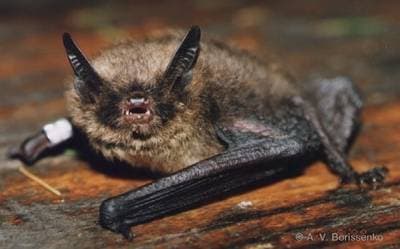
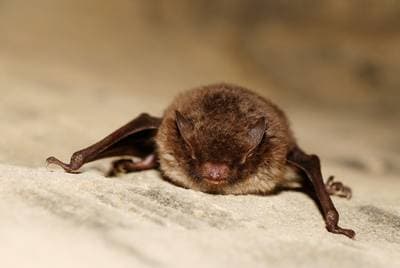
Gould's Wattled Bat is a medium-sized bat species endemic to Australia and one of the continent's most common and adaptable bats. The species is named for the distinctive fleshy lobes or 'wattles' located at the corners of its mouth.
Neville W. Cayley (1887-1950) (Public domain)
Learn together
Use this page to talk about conservation, habitat, and why each species matters.
Quick facts
Perfect for kids and families
⚖️Weight
12–16 g
⏳Lifespan
12–18 yrs
🍽️Diet
Insectivore
⚡Top speed
35 km/h
Mini challenge
What does Gould's Wattled Bat usually eat?
Try together before you keep scrolling
Pick an answer
Weight
12–16 g
Length
4.5–5.5 cm
Wingspan
28–32 cm
Top Speed
35 km/h
Lifespan
12–18 yrs
Diet
Insectivore
Listen to this species
Ljud
Distribution map
Utbredning
Adventure step • Meet the species
Overview
Gould's Wattled Bat is a medium-sized bat species endemic to Australia and one of the continent's most common and adaptable bats. The species is named for the distinctive fleshy lobes or 'wattles' located at the corners of its mouth. These wattles are a unique characteristic that distinguish the genus Chalinolobus from other bats. The fur is thick and soft, with a chocolate-brown to dark brown coloration on the upper side and somewhat lighter underneath. The species has relatively large ears and a robust body compared to many other insectivorous bats. This bat is remarkable for its ability to adapt to diverse environments, from rainforests and eucalyptus woodlands to urban parks and gardens. It has successfully colonized cities and suburbs across Australia, where it is often found roosting in buildings, tree hollows, and under loose bark. Gould's Wattled Bat is a skilled hunter that uses echolocation to capture flying insects in the air. Its echolocation calls are relatively low-frequency, allowing the species to detect larger insects at greater distances than many other bats. The species' hunting behavior is fascinating to observe. It typically flies 3-10 meters above ground in a fast and powerful flight pattern, often along forest tracks, over open grasslands, or around street lighting where insects congregate. Gould's Wattled Bat is known to be an opportunistic hunter that quickly exploits temporary food resources. During warm summer evenings, several individuals can be seen hunting together around the same light source, each catching beetles, moths, and other flying insects. Socially, this is a colonial species, particularly during the breeding season. Females gather in maternity colonies that can contain from a few to over one hundred individuals, while males often roost alone or in small groups. Young are typically born in December-January (Australian summer), and females usually give birth to one pup per year, occasionally twins. The young are capable of flight after approximately five weeks and become independent after a few more weeks. Gould's Wattled Bat can live surprisingly long for its size, with documented lifespans exceeding 16 years in the wild.
Adventure step • Where it lives
Habitat
ForestWoodlandUrbanGardenGrasslandFarmland
Gould's Wattled Bat displays remarkable habitat flexibility and occurs in almost all terrestrial environments in Australia. The species is found from coastal rainforests and wet eucalyptus forests to dry woodlands, savannas, and even semi-desert areas with sparse vegetation. It thrives particularly well in mosaic environments where forested areas alternate with open grasslands, providing good hunting opportunities. Urban and suburban areas have become important habitats for the species, where it benefits from parks, gardens, and the rich insect fauna attracted to artificial lighting. During the day, Gould's Wattled Bat seeks out a variety of roosting sites. In natural environments, tree hollows are primarily used, especially in old eucalyptus trees, as well as spaces under loose bark. In urban areas, the species has adapted to using buildings and is often found in roof spaces, under roof tiles, in wall crevices, and behind cladding. The species frequently switches roost sites, sometimes several times per week, which is believed to be a strategy to avoid parasites and predators. This behavior makes it important to preserve a network of potential roost sites within the species' home range.
Adventure step • Through the seasons
Seasonal Behavior
Gould's Wattled Bat is active year-round in most of its range, but activity patterns vary with the seasons. During the Australian spring and summer (September-March), the species is most active, when insect availability is at its peak. This is also the mating and maternity period, when females gather in larger colonies to give birth and raise their young. Mating typically occurs in autumn (March-May), but females store the males' sperm over winter and do not fertilize their eggs until spring in September. During the winter months (June-August), activity decreases somewhat in the southern and colder parts of the range, but the species does not hibernate. Instead, it flies out on milder nights to hunt and spends more time in a resting state to conserve energy when temperatures drop.
Adventure step • Family life
Breeding
Gestation
90 days
Offspring
1–2
Adventure step • Wild behavior
Behavior & Ecology
Activity Pattern
Nocturnal
Social Behavior
Colonial, especially females during maternity period who can form groups of up to 100 individuals. Males are more solitary or gather in small groups.
Migration
Resident
Population
Common and stable population throughout Australia
Did you know?
Gould's Wattled Bat can eat up to half its own body weight in insects every single night!
The fleshy 'wattles' at the mouth may help direct echolocation sounds forward, acting like tiny megaphones.
A single colony of Gould's Wattled Bats can consume several million insects during a single summer.
These bats can hear sound frequencies up to 100 kHz, far beyond what humans can perceive (max 20 kHz).
Gould's Wattled Bat is so adaptable that it occurs throughout Australia except in the most extreme desert areas.
Newborn pups are so large at birth that they weigh almost 30% of the mother's weight – equivalent to a human giving birth to a 20 kg baby!
The species can fly at speeds up to 35 km/h when pursuing prey.
Gould's Wattled Bat has been discovered to use magnetoreception for navigation, meaning they can sense Earth's magnetic field.
Adventure step • Scientific place
Taxonomy
KingdomAnimalia
ClassMammalia
OrderChiroptera
FamilyVespertilionidae
SpeciesChalinolobus gouldii
No sources have been added yet.
Cite this page
Fun Wild Facts (2026) Gould's Wattled Bat (Chalinolobus gouldii). https://www.funwildfacts.com/oceanien/mammal/gould-s-wattled-bat [May 30, 2026]
Similar animals
Least Concern
🦬 Mammals
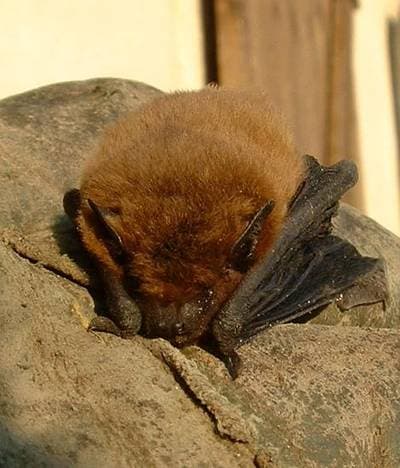
45 Khz Pipistrelle
Pipistrellus pipistrellus
3.5–8 g
4–16 yrs
ForestWetlandWoodland+7
Least Concern
🦬 Mammals
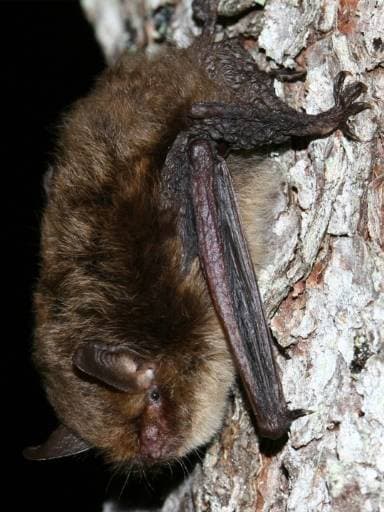
Alcathoe Bat
Myotis alcathoe
3.5–6 g
3–8 yrs
ForestWoodlandWetland+2