Least Concern
Horse
Equus caballus
The horse (Equus caballus) is one of humanity's oldest and most important domesticated animals, first tamed approximately 6,000 years ago on the vast steppes of Central Asia. This majestic ungulate has shaped civilizations, revolutionized transportation and agriculture, and played crucial roles in war and peace throughout history.
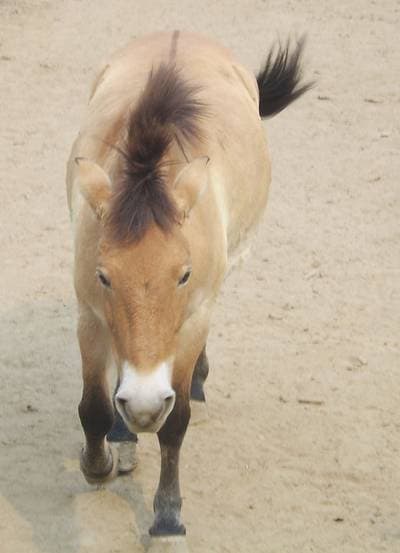
Mikel Ortega from Errenteria, Basque Country, Spain, with a retouche by Richard Bartz. See the original file here. (CC BY-SA 2.0)
Learn together
Use this page to talk about conservation, habitat, and why each species matters.
Quick facts
Perfect for kids and families
⚖️Weight
380–1000 kg
⏳Lifespan
25–30 yrs
🍽️Diet
Herbivore
⚡Top speed
88 km/h
Mini challenge
What does Horse usually eat?
Try together before you keep scrolling
Pick an answer
Weight
380–1000 kg
Length
2.2–2.7 m
Height
1.4–1.8 m
Top Speed
88 km/h
Lifespan
25–30 yrs
Diet
Herbivore
Listen to this species
Ljud
Distribution map
Utbredning
Adventure step • Meet the species
Overview
The horse (Equus caballus) is one of humanity's oldest and most important domesticated animals, first tamed approximately 6,000 years ago on the vast steppes of Central Asia. This majestic ungulate has shaped civilizations, revolutionized transportation and agriculture, and played crucial roles in war and peace throughout history. Modern horses exist in hundreds of breeds, from miniature horses weighing just 50 kg to massive draft horses exceeding one ton. Despite this variation, all horses share the same fundamental anatomy: long, powerful legs built for speed, a large heart capable of pumping up to 75 liters of blood per minute during exertion, and a unique digestive system adapted for continuous grass grazing. The horse's senses are exceptionally well-developed for a prey animal. Their eyes are positioned on the sides of the head, providing nearly 360-degree vision with only two small blind spots directly in front of the nose and behind the tail. They possess excellent night vision thanks to a reflective layer in the eye called the tapetum lucidum. Hearing is equally important – horses' ears can rotate 180 degrees independently to capture sounds from all directions. Their communication is sophisticated, including a rich repertoire of neighs, snorts, and body language through ear position, tail movement, and posture. In the wild, horses live in stable herds led by a dominant mare, with a stallion protecting the group. This social structure remains deeply ingrained even in domesticated horses, which develop strong bonds with both conspecifics and humans. Horses sleep remarkably little compared to other large mammals – only 2-3 hours per day – and can actually sleep standing up thanks to a special locking mechanism in their legs called the stay apparatus. They are herbivores with a sensitive digestive system requiring constant access to forage, preferably through slow grazing over 16-18 hours daily. Today, horses are used worldwide for everything from agriculture and transportation to sport, therapy, and recreation. Equine-assisted therapy helps people with physical and psychological challenges, while equestrian sports like dressage, show jumping, and harness racing attract millions of spectators. Despite the advent of motorization, approximately 60 million horses exist worldwide, testament to the enduring bond between humans and horses.
Adventure step • Where it lives
Habitat
GrasslandFarmlandForestMountainDesertSavannaWoodlandUrbanGarden
Horses are extremely adaptable and can thrive in a wide variety of environments, from arctic tundra to arid deserts. Originally, they evolved on open grassland steppes where their speed and endurance gave them an advantage against predators. Today, domesticated horses are found on every continent except Antarctica, having adapted to everything from cold Nordic climates to tropical regions. Wild and feral horses prefer open landscapes such as prairies, savannas, and grasslands where they can spot predators from a distance and have access to grass year-round. In Nordic countries, horses are primarily kept on farms and studs with access to pasture during summer months and stables for winter housing. Icelandic horses and certain other Nordic breeds are particularly well-adapted to cold climates with thick winter coats and the ability to survive on rougher forage. Ideal horse keeping includes access to both shelter and open areas where they can move freely, graze naturally, and interact socially with other horses.
Adventure step • Through the seasons
Seasonal Behavior
Horses display clear seasonal adaptations, particularly in temperate climates. During spring and autumn, they undergo a complete coat change – shedding their thick winter coat in spring to develop a thin summer coat, and vice versa in autumn. These changes are triggered by day length rather than temperature. Stallion behavior is also affected by seasons, with increased activity and territoriality during spring and summer, the natural breeding season. Mares are seasonally polyestrous, meaning they have regular estrous cycles during the bright months (April-October) but often go into reproductive rest during winter. In modern studs, these natural cycles are often controlled with artificial lighting to produce foals earlier in the year.
Adventure step • Family life
Breeding
Gestation
340 days
Offspring
1–1
Adventure step • Wild behavior
Behavior & Ecology
Activity Pattern
Diurnal
Social Behavior
Horses are strongly social herd animals with complex hierarchies led by an experienced dominant mare, while the stallion primarily protects the group.
Migration
Resident
Population
Approximately 60 million domesticated horses worldwide, plus small populations of feral horses and around 2,000 wild Przewalski's horses
Did you know?
Horses cannot vomit due to a strong muscle functioning as a one-way valve in the esophagus – this makes them extra sensitive to food poisoning.
A horse's teeth continue growing throughout their life, and you can actually estimate a horse's age by studying the shape and wear of their teeth.
Horses can sleep standing up by locking their legs in a special position, but they must lie down to get REM sleep and dream.
The maximum horsepower ever measured from a horse is actually only about 15 horsepower in short bursts – the unit 'horsepower' isn't quite based on an actual horse's power!
Horses have the largest eyes of any land-dwelling mammal, giving them exceptionally good vision even in near-total darkness.
A horse's heart weighs between 4-5 kg in an adult horse and can pump up to 75 liters of blood per minute during hard work.
Horses can recognize and remember humans and other horses even after many years of separation.
The wild ancestor of today's horse, Przewalski's horse, has 66 chromosomes while domesticated horses have 64 – but they can still produce fertile offspring together.
Adventure step • Scientific place
Taxonomy
KingdomAnimalia
ClassMammalia
OrderPerissodactyla
FamilyEquidae
SpeciesEquus caballus
No sources have been added yet.
Cite this page
Fun Wild Facts (2026) Horse (Equus caballus). https://www.funwildfacts.com/norden/mammal/horse [May 30, 2026]
Similar animals
Least Concern
🦬 Mammals
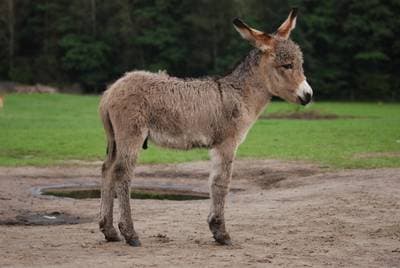
Donkey
Equus asinus
180–480 kg
25–50 yrs
DesertSavannaGrassland+3
Least Concern
🦬 Mammals
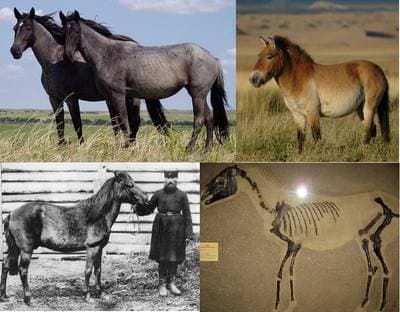
Pony
Equus ferus
90–450 kg
20–35 yrs
GrasslandFarmlandHeathland+2