Least Concern
East European Vole
Microtus levis
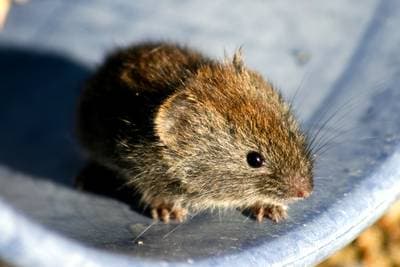
The East European Vole (Microtus levis) is a small rodent belonging to the hamster family and is closely related to the Common Vole. This discreet animal is most common in Eastern Europe and Western Asia, but also occurs in Finland where it reaches its northernmost distribution.
Graphodatsky et al. (CC BY 2.0)
Learn together
Use this page to talk about conservation, habitat, and why each species matters.
Quick facts
Perfect for kids and families
⚖️Weight
15–35 g
⏳Lifespan
0.5–1.5 yrs
🍽️Diet
Herbivore
🛡️Status
Least Concern
Mini challenge
What does East European Vole usually eat?
Try together before you keep scrolling
Pick an answer
Weight
15–35 g
Length
9–12 cm
Lifespan
0.5–1.5 yrs
Diet
Herbivore
Listen to this species
Ljud
Distribution map
Utbredning
Adventure step • Meet the species
Overview
The East European Vole (Microtus levis) is a small rodent belonging to the hamster family and is closely related to the Common Vole. This discreet animal is most common in Eastern Europe and Western Asia, but also occurs in Finland where it reaches its northernmost distribution. With its compact body measuring 9-12 centimeters and weighing only 15-35 grams, the East European Vole is one of our smallest vole species. It has dense, soft fur that is grey-brown to yellowish-brown on the upper side and light grey to whitish on the underside. The East European Vole differs from other vole species through its relatively short tail which is only about one-third of the body length, as well as its small ears that are almost hidden in the fur. The teeth grow continuously throughout life, which is typical for rodents, and it has strong molars adapted for chewing plant material. The small front paws are equipped with strong claws that make them skilled diggers. The eyes are small and dark, and vision is relatively weak, but this is compensated by excellent hearing and sense of smell. This vole species thrives best in moist grasslands, meadows, and humid forest clearings where vegetation is dense and lush. Unlike many other voles, the East European Vole often completely avoids open fields and prefers areas with good cover under dense grass or low shrubs. They create complex tunnel systems both underground and through the dense grass, where they can move quickly while protected from predators. The nest is built in an underground chamber lined with dry grass and plant fibers. The East European Vole is active both day and night, with short periods of activity followed by rest. During winter, they continue to be active under the snow cover where they build tunnels and search for food. The diet consists mainly of grass, herbs, seeds, and roots, and during a day an East European Vole can eat almost as much as it weighs. Reproduction occurs from early spring to late autumn, and the female can have several litters per year with 3-8 young in each litter. The young are born naked and blind but grow quickly and are independent after only three weeks.
Adventure step • Where it lives
Habitat
GrasslandWetlandFarmlandForestWoodland
The East European Vole prefers moist grasslands, meadows, and wet pastures in lowland and low-lying areas. It thrives particularly well where there is dense vegetation of grass, sedges, and herbs that provide both shelter and abundant food. Unlike the Common Vole which often occurs on drier agricultural land, the East European Vole seeks wetter environments near watercourses, lakes, and marsh edges. In Finland, the species occurs mainly in the southern and eastern parts of the country where these habitats exist. Although the East European Vole is primarily associated with open wetlands, it can also be found in humid forest clearings and along forest edges where grass vegetation is rich. It completely avoids open fields and dry ground, as well as heavily grazed areas where vegetation is too short to provide sufficient cover. The tunnel systems are laid both underground and through dense grass on the surface, providing quick escape routes when predators approach. During winter, the tunnels under the snow cover become particularly important as protection from both cold and predators.
Adventure step • Through the seasons
Seasonal Behavior
The East European Vole is active year-round and does not hibernate. During summer, it is most active during the cooler hours of morning and evening, but continues throughout the night as well. In winter, activity continues under the snow cover where the vole builds a network of tunnels between the snow and the ground. This so-called subnivean space provides protection from both extreme cold and many predators. Reproduction is most intense from April to September but can continue even during winter if conditions are favorable. During autumn, the vole increases its food intake to build up fat reserves, although these reserves are relatively small due to the animal's small size.
Adventure step • Family life
Breeding
Gestation
20 days
Offspring
3–8
Adventure step • Wild behavior
Behavior & Ecology
Activity Pattern
Cathemeral
Social Behavior
The East European Vole is mostly solitary outside the mating season, but can sometimes live in loose colonies where several individuals have overlapping home ranges. Females are territorial toward other females, especially during breeding season.
Migration
Resident
Population
The population is stable within the species' main range in Eastern Europe and Western Asia, although it is rare in the northernmost parts of its distribution.
Did you know?
The East European Vole can have up to 5-6 litters of young during a single year, making it a very productive species!
It has a heart rate of over 600 beats per minute when active – that's ten times faster than a human!
The East European Vole eats nearly its own body weight in food each day to maintain its high metabolism.
They create a network of runways through the grass that can be several hundred meters long and are used by multiple generations.
During winter, the East European Vole can continue to reproduce under the snow cover where the temperature is relatively stable.
Their teeth grow approximately 1-2 millimeters per week, so they must constantly gnaw to wear them down!
The East European Vole can swim if necessary, despite usually avoiding open water.
An East European Vole produces almost 100 droppings per day, which helps fertilize the soil and spread seeds!
Adventure step • Scientific place
Taxonomy
KingdomAnimalia
ClassMammalia
OrderRodentia
FamilyCricetidae
SpeciesMicrotus levis
No sources have been added yet.
Cite this page
Fun Wild Facts (2026) East European Vole (Microtus levis). https://www.funwildfacts.com/norden/mammal/east-european-vole [May 30, 2026]
Similar animals
Least Concern
🦬 Mammals
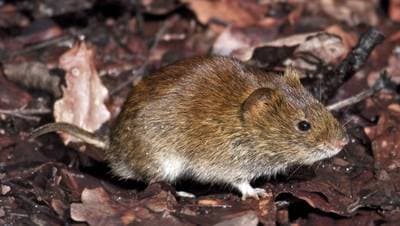
Bank Vole
Myodes glareolus
15–40 g
0.5–2 yrs
ForestWoodlandGrassland+3
Least Concern
🦬 Mammals
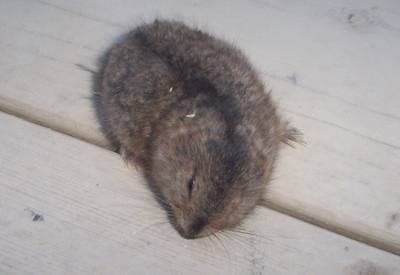
Brown Lemming
Lemmus trimucronatus
40–112 g
0.5–2 yrs
TundraGrasslandWetland+1