Least Concern
Bearded Seal
Erignathus barbatus
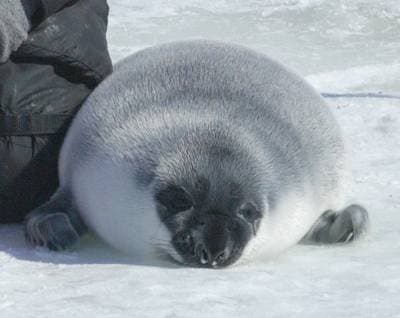
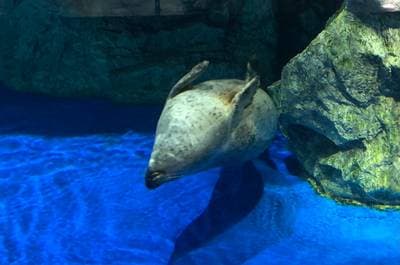
The bearded seal is one of the most charismatic animals of the Arctic, easily recognizable by its long, thick whiskers that can grow up to 30 centimeters long, giving it a distinctive appearance. Reaching lengths of up to 2.7 meters and weighing as much as 430 kilograms, this is the largest seal in Arctic waters after the walrus.
Ansgar Walk (CC BY-SA 3.0)
Learn together
Use this page to talk about conservation, habitat, and why each species matters.
Quick facts
Perfect for kids and families
⚖️Weight
200–430 kg
⏳Lifespan
20–31 yrs
🍽️Diet
Carnivore
⚡Top speed
20 km/h
Mini challenge
What does Bearded Seal usually eat?
Try together before you keep scrolling
Pick an answer
Weight
200–430 kg
Length
2–2.7 m
Top Speed
20 km/h
Lifespan
20–31 yrs
Diet
Carnivore
Listen to this species
Ljud
Distribution map
Utbredning
Adventure step • Meet the species
Overview
The bearded seal is one of the most charismatic animals of the Arctic, easily recognizable by its long, thick whiskers that can grow up to 30 centimeters long, giving it a distinctive appearance. Reaching lengths of up to 2.7 meters and weighing as much as 430 kilograms, this is the largest seal in Arctic waters after the walrus. Unusually among seals, females are typically larger than males. The coat is dark grey to brownish-grey on the back and lighter on the belly, becoming darker when wet. This seal is perfectly adapted to life on pack ice and in shallow Arctic waters. Unlike many other seals, the bearded seal prefers to hunt in shallow water, often less than 200 meters deep, where it searches for bottom-dwelling organisms. With its extremely sensitive whiskers, it can detect crustaceans, clams, and other bottom-dwelling animals even in complete darkness. These whiskers are so sensitive they can detect vibrations from prey burrowing into the seafloor. The bearded seal is renowned for its fascinating songs during the breeding season. Males produce long, melodious calls that can be heard both below and above the water surface, sometimes resembling science fiction sound effects. These songs can last up to a minute and are used to attract females and mark territory. The song is so powerful it can be heard several kilometers away through the ice. In the Nordic region, the bearded seal occurs primarily in Arctic waters around Svalbard and northern Norway, though occasional individuals may wander south along the Norwegian coast. It plays an important role in Arctic ecosystems and has been a vital resource for indigenous peoples for thousands of years, who have utilized everything from the meat to the skin and blubber.
Adventure step • Where it lives
Habitat
OceanCoastarcticTundra
The bearded seal lives exclusively in Arctic and sub-Arctic waters around the polar regions. It prefers areas with pack ice and drift ice fields, but unlike many other ice seals, it requires relatively shallow water – usually less than 200 meters deep – because it feeds on bottom-dwelling animals. This means it is often found along coastal areas and over the continental shelf. The bearded seal is known to be more coastal than many other Arctic seals and avoids deep ocean areas. It thrives best where the seafloor consists of mud or sand where bottom-dwelling organisms are abundant. During summer months when the ice melts, it may also rest on rocky shores or sandbanks. In Northern Europe, it occurs primarily around Svalbard and in the Barents Sea, but can also be seen along the northern Norwegian coast.
Adventure step • Through the seasons
Seasonal Behavior
The bearded seal follows the ice movements through the seasons. In spring, between March and May, females give birth to their pups on drift ice fields. Unlike many other seals that give birth on stable ice, the bearded seal often chooses thinner drift ice. Pups nurse from their mothers for 18-24 days and grow very rapidly. During late summer and autumn, when ice is at its minimum, seals often gather in larger groups on remaining ice fields or along the coast. Autumn is also molting season when they shed their fur. During winter, they follow the pack ice movements and spread over larger areas.
Adventure step • Family life
Breeding
Gestation
340 days
Offspring
1–1
Adventure step • Wild behavior
Behavior & Ecology
Activity Pattern
Diurnal
Social Behavior
Mostly solitary animals that only seek out conspecifics during the spring breeding season.
Migration
Partial Migrant
Population
The global population is estimated at 500,000–700,000 individuals
Did you know?
Their long whiskers can grow up to 30 centimeters long and are used as sensitive antennae to find food on the seafloor!
Males' songs during breeding season sound like sounds from outer space and can be heard several kilometers away through the ice.
The name comes from the impressive whiskers that resemble a large beard – hence 'bearded seal'.
A bearded seal can hold its breath for over 20 minutes when diving for food.
Newborn pups weigh around 30-40 kilograms and can swim almost immediately after birth.
Unlike many other seals, pups are born with brown fur instead of white, helping them blend in against wet ice.
Their whiskers are so sensitive they can detect a fish moving 100 meters away through vibrations in the water.
The bearded seal can eat up to 60 different species of bottom-dwelling animals, including crabs, clams, and sea cucumbers!
Adventure step • Scientific place
Taxonomy
KingdomAnimalia
ClassMammalia
OrderCarnivora
FamilyPhocidae
SpeciesErignathus barbatus
No sources have been added yet.
Cite this page
Fun Wild Facts (2026) Bearded Seal (Erignathus barbatus). https://www.funwildfacts.com/norden/mammal/bearded-seal [May 30, 2026]
Similar animals
Least Concern
🦬 Mammals
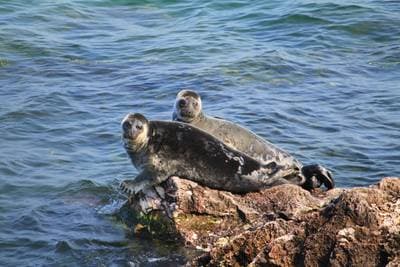
Baikal Seal (Nerpa)
Pusa sibirica
50–130 kg
40–56 yrs
LakeCoastTundra
Least Concern
🦬 Mammals
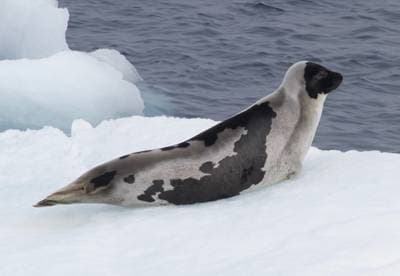
Harp Seal
Pagophilus groenlandicus
120–180 kg
25–35 yrs
OceanCoastarctic+1