Least Concern
Pale Tussock
Calliteara pudibunda
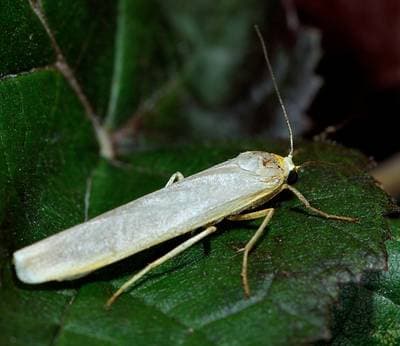
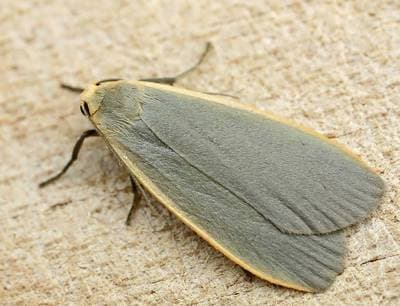
The Pale Tussock (Calliteara pudibunda) is a fascinating moth belonging to the family Erebidae. This medium-sized moth has a wingspan of 4-6.5 centimeters and displays pronounced sexual dimorphism – females are considerably larger and paler than males.
Darius Baužys (CC BY 3.0)
Learn together
Use this page to talk about conservation, habitat, and why each species matters.
Quick facts
Perfect for kids and families
⚖️Weight
0.0005–0.001 g
⏳Lifespan
0.08–0.25 yrs
🍽️Diet
Herbivore
🛡️Status
Least Concern
Mini challenge
What does Pale Tussock usually eat?
Try together before you keep scrolling
Pick an answer
Weight
0.0005–0.001 g
Length
4–6.5 cm
Wingspan
4–6.5 cm
Lifespan
0.08–0.25 yrs
Diet
Herbivore
Listen to this species
Ljud
Distribution map
Utbredning
Adventure step • Meet the species
Overview
The Pale Tussock (Calliteara pudibunda) is a fascinating moth belonging to the family Erebidae. This medium-sized moth has a wingspan of 4-6.5 centimeters and displays pronounced sexual dimorphism – females are considerably larger and paler than males. Males have grey-brown wings with darker cross-bands, while females are much paler, almost whitish with subtle patterns. Both sexes have characteristically hairy antennae, but males possess more distinctly feathered antennae which they use to detect pheromones from females. What truly makes the Pale Tussock famous is not the adult moth but its spectacular caterpillar. The larva is one of the most eye-catching caterpillars in the Nordic region with its yellow-green or pink coloration and four distinct tufts of yellow, red, or white hair that stick up like brushes from its back. The fifth and final tuft at the tail end is long and black, giving the caterpillar an unmistakable appearance. These hairs aren't just for show – they can cause skin irritation in sensitive individuals, so it's best to admire them from a distance. The Pale Tussock undergoes complete metamorphosis during its life. After hatching from the egg, the larva spends several weeks feeding voraciously on leaves from various deciduous trees. When fully grown, usually in August or September, it spins a loose cocoon among leaves or in leaf litter where it pupates. The moth overwinters as a pupa and emerges the following spring, typically between April and June. Adult moths live only a few weeks and their main purpose is to reproduce. This species is common across much of Europe and extends eastward through temperate Asia to Japan. In the Nordic region, it occurs in southern and central Sweden, southern Norway, Denmark, and southern Finland. The Pale Tussock is a habitat generalist and can be found in deciduous forests, parks, gardens, and scrubland where its host plants are available.
Adventure step • Where it lives
Habitat
ForestWoodlandGardenFarmlandHeathland
The Pale Tussock thrives in a variety of deciduous-rich environments throughout its range. It is particularly common in mixed woodland with oak, birch, and hazel, but can also be found in parkland, older gardens, orchards, and along tree-lined avenues. The species prefers environments with good access to sunlight but also thrives in partially shaded locations where host plants grow abundantly. In the Nordic region, the Pale Tussock is strongly associated with areas of rich deciduous vegetation in the southern and central parts. It is often found in cultural landscapes where people cultivate fruit trees and ornamental shrubs, which means the caterpillar can sometimes be seen in gardens and parks in urban areas. During spring and early summer, adult moths are attracted to artificial lighting, and it's not uncommon to find them resting on walls near lights early in the morning.
Adventure step • Through the seasons
Seasonal Behavior
The Pale Tussock has one generation per year in the Nordic region. Adult moths emerge from their pupae between April and June, with a peak in May. Males typically emerge a few days before females and immediately begin searching for mates by following pheromone trails through the night. After mating, females lay their eggs in June, and the caterpillars hatch after about two weeks. The larvae are active throughout summer, from July to September, and it is during this time they grow and undergo their molts. In August-September, the fully grown larvae spin their cocoons and pupate. The pupa overwinters in sheltered locations among leaves or in leaf litter, ready to give rise to the next generation of moths the following spring.
Adventure step • Family life
Breeding
Incubation
14 days
Offspring
100–400
Adventure step • Wild behavior
Behavior & Ecology
Activity Pattern
Nocturnal
Social Behavior
The Pale Tussock is a solitary species where individuals live independently. Adult moths are nocturnal and spend their days resting on tree trunks or under leaves, well camouflaged against their surroundings.
Migration
Resident
Population
Common and stable population throughout the Nordic region, especially in southern and central Sweden, southern Norway, Denmark, and southern Finland
Did you know?
The caterpillar's colorful hair tufts contain irritating substances that protect it from birds and other predators – a clever defense mechanism!
The name 'pudibunda' comes from Latin meaning 'modest' or 'bashful', probably referring to the caterpillar's jerky movements when disturbed.
Males can detect the scent of a female from several kilometers away thanks to their sensitive feathered antennae.
A single female can lay between 100 and 400 eggs during her short lifetime, often in neat clusters on the underside of bark.
The caterpillar can eat leaves from over 30 different tree species, including oak, birch, hazel, beech, willow, and fruit trees – it's not picky!
When threatened, the caterpillar can curl up and drop to the ground, where it lies completely still and plays dead.
The Pale Tussock pupa has a special ability to survive cold Nordic winters by producing natural antifreeze compounds in its body.
Adult moths don't eat at all – they live on energy reserves gathered as caterpillars and focus entirely on finding mates and reproducing.
Adventure step • Scientific place
Taxonomy
KingdomAnimalia
ClassInsecta
OrderLepidoptera
FamilyErebidae
SpeciesCalliteara pudibunda
No sources have been added yet.
Cite this page
Fun Wild Facts (2026) Pale Tussock (Calliteara pudibunda). https://www.funwildfacts.com/norden/insect/pale-tussock [May 30, 2026]
Similar animals
Least Concern
🦋 Insects
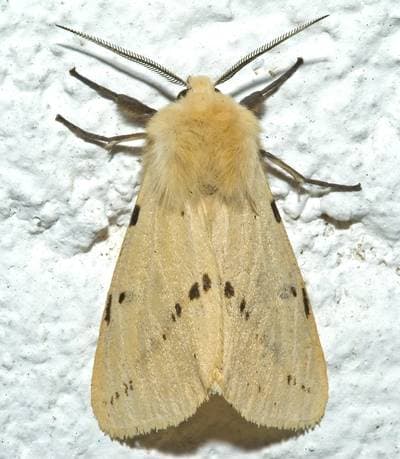
Buff Ermine
Spilarctia lutea
0.0001–0.00025 g
0.08–0.25 yrs
GrasslandFarmlandGarden+3
Least Concern
🦋 Insects
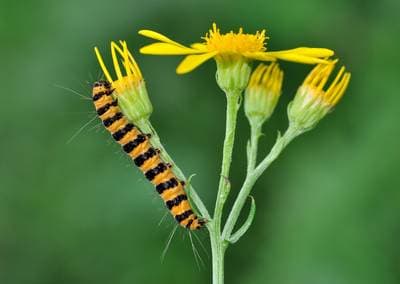
Cinnabar Moth
Tyria jacobaeae
0.00015–0.0003 g
0.08–0.17 yrs
GrasslandHeathlandFarmland+3