Least Concern
Lunar Underwing
Anchoscelis lunosa
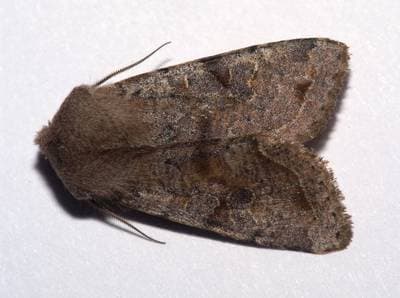
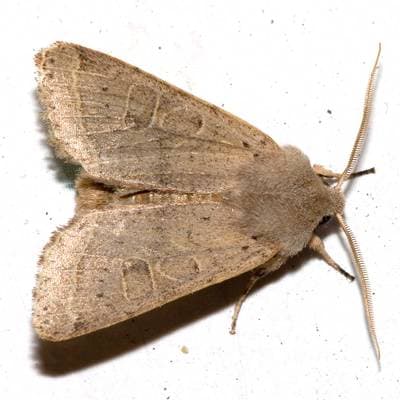
The Lunar Underwing (Anchoscelis lunosa) is a captivating moth belonging to the family Noctuidae, characterized by elegant wings adorned with crescent moon-like markings. With a wingspan of 35-42 millimeters, it ranks among the medium-sized noctuid moths.
(c) Ross Laugher, some rights reserved (CC BY-NC) (CC BY-NC)
Learn together
Use this page to talk about conservation, habitat, and why each species matters.
Quick facts
Perfect for kids and families
⚖️Weight
0.0002–0.0004 g
⏳Lifespan
0.08–0.25 yrs
🍽️Diet
Herbivore
🛡️Status
Least Concern
Mini challenge
What does Lunar Underwing usually eat?
Try together before you keep scrolling
Pick an answer
Weight
0.0002–0.0004 g
Length
1.8–2.4 cm
Wingspan
3.5–4.2 cm
Lifespan
0.08–0.25 yrs
Diet
Herbivore
Listen to this species
Ljud
Distribution map
Utbredning
Adventure step • Meet the species
Overview
The Lunar Underwing (Anchoscelis lunosa) is a captivating moth belonging to the family Noctuidae, characterized by elegant wings adorned with crescent moon-like markings. With a wingspan of 35-42 millimeters, it ranks among the medium-sized noctuid moths. The forewings display a beautiful variation of gray, brown, and reddish-brown tones with distinctive white or pale cross-lines and crescent-shaped spots that give the species its evocative name. The hindwings are lighter, often grayish with darker borders, giving the moth a subtle yet distinctive appearance. This species is distributed across much of the temperate zone of Europe and extends eastward into Asia. In the Nordic region, it occurs in southern and central Sweden, Norway, Denmark, and Finland, inhabiting varied environments from deciduous and mixed forests to parks, gardens, and agricultural landscapes. The moth prefers areas with abundant deciduous trees, particularly oak, birch, and willow, which serve as the primary host plants for the larvae. Adult moths are nocturnal and attracted to light sources, making them a common sight at light traps during late summer and autumn. The larvae are robust and well-equipped for survival. They have a greenish or brownish body with longitudinal stripes and feed on the leaves of deciduous trees from spring to early summer. After sufficient feeding, the larva transforms into a pupa in the soil, where it spends the summer in dormancy (aestivation). This is an adaptation to avoid the warmer months and synchronize with the host plants' growth cycle. The adult moths then emerge in August and September, making the Lunar Underwing an autumn-flying species. Anchoscelis lunosa is relatively common where it occurs and is not considered threatened. It plays an important ecological role as a pollinator of night-flowering plants and as prey for bats, nocturnal birds, and predatory insects. The species is an excellent example of the often-overlooked beauty and ecological significance of moths.
Adventure step • Where it lives
Habitat
ForestWoodlandHeathlandGrasslandFarmlandGardenUrban
The Lunar Underwing thrives in a variety of habitats where deciduous trees are common. The species is found primarily in deciduous and mixed forests, but is also common in cultural landscapes such as parks, large gardens, tree-lined avenues, and agricultural areas with tree groves. The moth prefers areas with oak, birch, willow, hazel, and alder – trees that the larvae use as food. Forest edges and semi-open landscapes with abundant flowering during late summer and autumn are particularly attractive to adult moths. In the Nordic countries, the species occurs up to central Scandinavia but is most common in the southern parts where the climate is milder and deciduous forests are more widespread. It can adapt to human presence and is often found in urban and suburban environments where there are sufficient trees and green spaces. However, the species is sensitive to overly intensive forestry and prefers areas with a variety of trees of different ages.
Adventure step • Through the seasons
Seasonal Behavior
The Lunar Underwing has a unique life cycle adapted to the Nordic climate. Eggs are laid in autumn and hatch the following spring, usually in April-May. The larvae feed actively during spring and early summer, reaching full size in June-July, after which they pupate in the soil. The pupa then enters summer dormancy and rests during the warmest months. Adult moths emerge in August and fly until October, with peak activity in September. This autumn-flying life cycle allows the species to avoid competition with many spring moths and utilize autumn floral resources when other species become scarcer.
Adventure step • Family life
Breeding
Incubation
14 days
Offspring
100–300
Adventure step • Wild behavior
Behavior & Ecology
Activity Pattern
Nocturnal
Social Behavior
Adult moths are solitary and meet primarily for mating. Larvae live individually on host plants but may sometimes occur in larger numbers on the same tree.
Migration
Resident
Population
Common and stable throughout most of its range
Did you know?
The name 'lunosa' comes from Latin meaning 'moon-shaped', referring to the characteristic pale crescent spots on the wings.
Unlike many other moths, the Lunar Underwing flies primarily in autumn, from August to October, when most other summer moths have already disappeared.
The larvae enter summer dormancy as pupae during the hottest months – an unusual strategy among Nordic moths!
Adult moths enjoy sipping nectar from autumn flowers like heather and thistles, as well as sap from damaged trees.
The moth's camouflage is so effective that when resting on tree bark, it's nearly impossible to spot.
A female can lay hundreds of eggs during her brief adult lifespan of just a few weeks.
The larvae can vary in color from light green to dark brown depending on which host plant they feed on.
The Lunar Underwing has excellent antennae that can detect pheromones from potential mates over long distances – sometimes several kilometers away!
Adventure step • Scientific place
Taxonomy
KingdomAnimalia
ClassInsecta
OrderLepidoptera
FamilyNoctuidae
SpeciesAnchoscelis lunosa
No sources have been added yet.
Cite this page
Fun Wild Facts (2026) Lunar Underwing (Anchoscelis lunosa). https://www.funwildfacts.com/norden/insect/lunar-underwing [May 30, 2026]
Similar animals
Least Concern
🦋 Insects
Angle Shades
Phlogophora meticulosa
0.0002–0.0004 g
0.08–0.25 yrs
GardenWoodlandFarmland+4
Least Concern
🦋 Insects
Bright-line Brown-eye
Lacanobia oleracea
0.0002–0.0004 g
0.08–0.25 yrs
GardenFarmlandWoodland+4