Least Concern
Garden Carpet
Xanthorhoe fluctuata
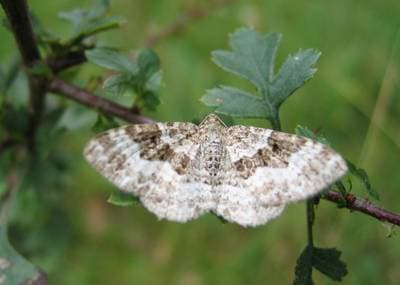
The Garden Carpet is one of the most common moths in the Nordic region and a familiar sight in gardens throughout Europe. This small geometrid moth gets its name from the characteristic wavy cross-bands that run across its grayish to brownish wings.
Learn together
Use this page to talk about conservation, habitat, and why each species matters.
Quick facts
Perfect for kids and families
⚖️Weight
0.015–0.03 g
⏳Lifespan
0.08–0.25 yrs
🍽️Diet
Herbivore
🛡️Status
Least Concern
Mini challenge
What does Garden Carpet usually eat?
Try together before you keep scrolling
Pick an answer
Weight
0.015–0.03 g
Length
1.1–1.3 cm
Wingspan
2–2.8 cm
Lifespan
0.08–0.25 yrs
Diet
Herbivore
Listen to this species
Ljud
Distribution map
Utbredning
Adventure step • Meet the species
Overview
The Garden Carpet is one of the most common moths in the Nordic region and a familiar sight in gardens throughout Europe. This small geometrid moth gets its name from the characteristic wavy cross-bands that run across its grayish to brownish wings. With a wingspan of 20-28 millimeters, the pattern varies considerably between individuals – from almost plain gray to distinctly marked with dark cross-bands. They belong to the family Geometridae, which is evident in the caterpillars' characteristic looping movement as they inch along like someone measuring fabric. The moth is active from early spring to late autumn and can produce two to three generations per year in southern regions, while northern areas typically have only one generation. The adult moths are nocturnal and are easily attracted to light sources, making them a common visitor to windows and outdoor lighting during summer nights. Despite being nocturnal, they can sometimes be seen resting on plants during the day, where their discreet color pattern provides excellent camouflage against bark and stones. The caterpillars are the real reason for the species' success. They are extremely polyphagous, meaning they can feed on an enormous number of different plant species. The Garden Carpet prefers cruciferous plants like cabbage, rapeseed, and radish, but the caterpillars also readily feed on herbs like dock, mallow, and other garden plants. The green to brownish caterpillars are relatively small and slender, reaching up to 2.5 centimeters in length when fully grown. The moth overwinters as a pupa in the ground or among plant debris, making it one of the first moths to emerge in spring. This adaptation, combined with the caterpillars' broad food choices and the ability to produce multiple generations per year, has made the Garden Carpet one of Europe's most successful and widespread moths. It plays an important role in the ecosystem both as a pollinator and as food for birds and other insectivores.
Adventure step • Where it lives
Habitat
GardenFarmlandUrbanWoodlandGrasslandHeathlandForest
The Garden Carpet is an extremely adaptable species that thrives in almost any environment where flowering plants occur. It is particularly common in gardens, parks, and agricultural landscapes where cruciferous plants are found. The moth is also found in forest edges, meadows, waste ground, and even in urban environments. Its ability to utilize a broad spectrum of host plants means it can establish itself almost anywhere from sea level up to lower mountain regions. The species' distribution extends across the entire temperate zone of the Northern Hemisphere. In the Nordic countries, it occurs in all nations, from southern Denmark to northern Norway and Finland. It has also been introduced to North America where it is now established in large parts of the USA and Canada. The caterpillars prefer open, sunny environments where host plants grow, while adult moths seek out flowering plants for nectar and can often be seen at night-flowering herbs.
Adventure step • Through the seasons
Seasonal Behavior
The first generation emerges early in spring, often as early as April in southern regions, from pupae that have overwintered in the soil. These moths mate and lay eggs that develop into a second generation flying in July-August. In favorable years, a third generation can occur in September. In northern regions, it is most common to have only one generation per year flying from June to August. Caterpillars are active from May to October depending on generation, and fully grown caterpillars pupate in the soil where they rest until the next season or emerge after a few weeks.
Adventure step • Family life
Breeding
Incubation
7 days
Offspring
50–200
Adventure step • Wild behavior
Behavior & Ecology
Activity Pattern
Nocturnal
Social Behavior
The moth is solitary and only meets conspecifics during mating. Males may sometimes gather around light sources at night.
Migration
Resident
Population
Very common and stable population throughout the Nordic region and Europe
Did you know?
The Garden Carpet can have up to three generations in a single year in southern regions!
The caterpillars move by looping their bodies like someone measuring with a tape measure – hence the name 'geometer'!
The moth can be active at temperatures as low as +5°C, making it one of the earliest moths of the year.
A single female can lay up to 200 eggs during her lifetime.
Wing patterns vary so much that no two moths look exactly alike – they have their own fingerprints!
Pupae can survive winter temperatures down to -20°C by producing a natural antifreeze.
Caterpillars can feed on over 50 different plant species, from garden cabbage to wild herbs.
The name 'Garden Carpet' comes from the moth being so common in British gardens that it's almost part of the furniture!
Adventure step • Scientific place
Taxonomy
KingdomAnimalia
ClassInsecta
OrderLepidoptera
FamilyGeometridae
SpeciesXanthorhoe fluctuata
No sources have been added yet.
Cite this page
Fun Wild Facts (2026) Garden Carpet (Xanthorhoe fluctuata). https://www.funwildfacts.com/norden/insect/garden-carpet [May 30, 2026]
Similar animals
Least Concern
🦋 Insects
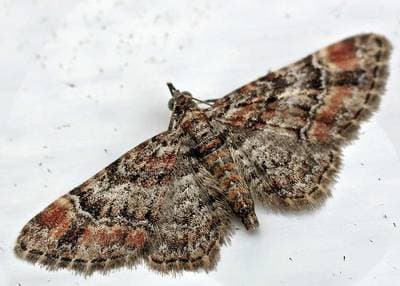
Cankerworm
Gymnoscelis rufifasciata
0.001–0.003 g
0.08–0.25 yrs
ForestWoodlandGarden+2
Least Concern
🦋 Insects
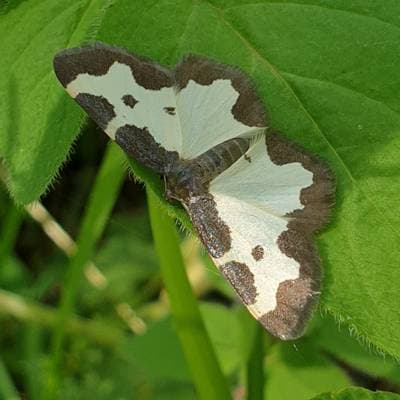
Clouded Border
Lomaspilis marginata
0.00015–0.0003 g
0.08–0.25 yrs
ForestWoodlandGarden+2