Least Concern
Black-Veined White
Aporia crataegi
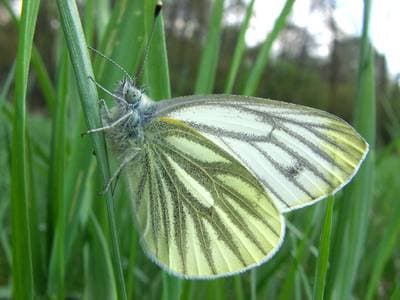
The Black-Veined White is a striking butterfly with distinctive white wings prominently marked by black veins, creating a delicate web-like pattern across its surface. With a wingspan of 5-7 centimeters, it is one of the larger members of the Pieridae family.
Christian Fischer (CC BY-SA 3.0)
Learn together
Use this page to talk about conservation, habitat, and why each species matters.
Quick facts
Perfect for kids and families
⚖️Weight
0.00015–0.00025 g
⏳Lifespan
0.08–0.16 yrs
🍽️Diet
Herbivore
⚡Top speed
15 km/h
Mini challenge
What does Black-Veined White usually eat?
Try together before you keep scrolling
Pick an answer
Weight
0.00015–0.00025 g
Length
2.8–3.3 cm
Wingspan
5.1–6.7 cm
Top Speed
15 km/h
Lifespan
0.08–0.16 yrs
Diet
Herbivore
Listen to this species
Ljud
Distribution map
Utbredning
Adventure step • Meet the species
Overview
The Black-Veined White is a striking butterfly with distinctive white wings prominently marked by black veins, creating a delicate web-like pattern across its surface. With a wingspan of 5-7 centimeters, it is one of the larger members of the Pieridae family. The wings appear semi-transparent due to the absence of scales along the veins, giving the butterfly its characteristic appearance. Females tend to have slightly heavier and darker wing markings than males, though both sexes share the same elegant vein structure. This fascinating species undergoes complete metamorphosis from egg to adult. Eggs are laid in clusters on host plants including hawthorn, blackthorn, and various fruit trees such as apple, cherry, and plum. The caterpillars are highly social, living together in communal silk tents, especially during their early instars. They are greyish with orange and black stripes along their sides and covered in fine hairs. The chrysalis is yellowish to green with black spots and attaches upright to plant stems or branches. Unfortunately, the Black-Veined White has declined dramatically across much of its range. In Sweden and large parts of Northern Europe, the species is now extremely rare or locally extinct, making it one of the most threatened butterflies in the region. Loss of suitable habitats, intensive agriculture with pesticide use, and declining availability of host plants have contributed to its decline. In some areas, conservation efforts are now underway to restore populations. The butterfly prefers warm, sun-exposed environments with abundant host plants. It flies in one or two generations per year depending on climate, typically from May to July. Adults are often seen seeking nectar from wild flowers such as thistles, field thistles, and clover. The Black-Veined White has an elegant, gliding flight pattern and can be observed both alone and in small groups when basking or visiting flower resources.
Adventure step • Where it lives
Habitat
GrasslandWoodlandFarmlandGardenHeathlandForest
The Black-Veined White thrives in open, sun-lit landscapes where host plants like hawthorn, blackthorn, and wild roses occur abundantly. It prefers clearings in deciduous woodland, roadside verges, hedgerows, orchards, and traditional cultural landscapes with varied vegetation. The species depends on warm microclimates and flowers for nectar, making south-facing slopes and sheltered locations particularly important. Historically, the Black-Veined White benefited from traditional farmland with scrub and hedgerows, but modern intensive cultivation methods and removal of wild hedges have drastically reduced available habitats. In areas where the species still persists, it is often near old orchards, nature reserves, or extensively managed land where host plants are allowed to grow freely. Restoration of flower-rich meadows and hedgerows is crucial for the species' survival.
Adventure step • Through the seasons
Seasonal Behavior
The Black-Veined White flies mainly during early summer, with adults visible from May to July depending on climate and geographic location. In southern parts of its range, there may be two generations per year, while northern populations have only one. Caterpillars hatch in summer and live socially in silk tents until autumn. As winter approaches, they seek shelter in dense silk nests where they hibernate as half-grown larvae. In spring they awaken, complete their feeding, and pupate in April-May, after which new adults emerge to start the cycle anew.
Adventure step • Family life
Breeding
Offspring
100–200
Adventure step • Wild behavior
Behavior & Ecology
Activity Pattern
Diurnal
Social Behavior
Caterpillars are distinctly social and live together in large communal silk tents where they both feed and rest collectively. Adult butterflies are often seen in groups at nectar-rich flowers.
Migration
Resident
Population
Sharply declining in Northern Europe, locally extinct in Sweden and many other areas, but still common in parts of southern and eastern Europe and Asia
Did you know?
Black-Veined White caterpillars live together in large silk tents that can house over 100 larvae at the same time!
The black veins on the wings contain no scales at all—they're just the empty wing nerves, making the wings partially transparent.
During winter, the caterpillars hibernate together in a communal silk tent where they remain completely still until spring arrives.
The Black-Veined White was once very common in Swedish gardens but has almost completely disappeared from the country since the 1980s.
A single female can lay up to 200 eggs during her short life as an adult butterfly.
The caterpillars can eat so much that they sometimes completely defoliate entire bushes of hawthorn or blackthorn.
In some parts of Europe, the Black-Veined White is used as an indicator of healthy fruit-growing environments.
Adult butterflies live only 3-6 weeks, but as larvae and pupae the species can be present for almost 10 months per year.
Adventure step • Scientific place
Taxonomy
KingdomAnimalia
ClassInsecta
OrderLepidoptera
FamilyPieridae
SpeciesAporia crataegi
No sources have been added yet.
Cite this page
Fun Wild Facts (2026) Black-Veined White (Aporia crataegi). https://www.funwildfacts.com/norden/insect/black-veined-white [May 30, 2026]
Similar animals
Least Concern
🦋 Insects
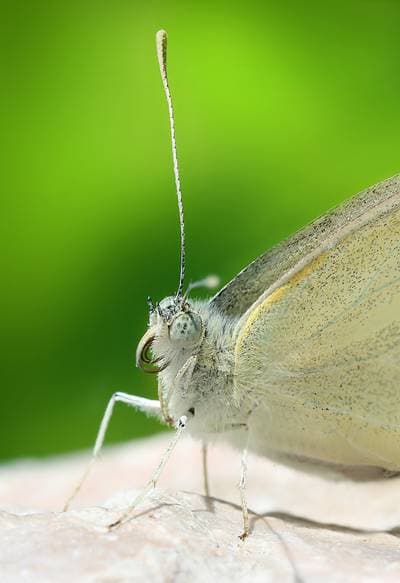
Cabbage White
Pieris rapae
0.02–0.04 g
0.027–0.164 yrs
FarmlandGardenUrban+3
Least Concern
🦋 Insects
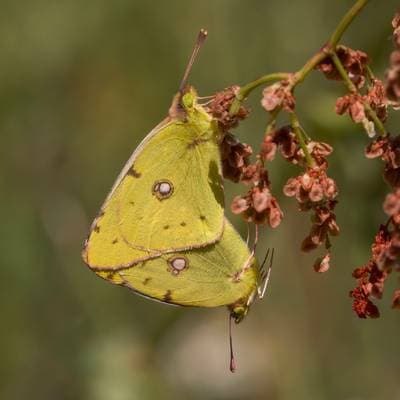
Clouded Yellow
Colias croceus
0.0002–0.0003 g
0.041–0.082 yrs
GrasslandFarmlandGarden+3