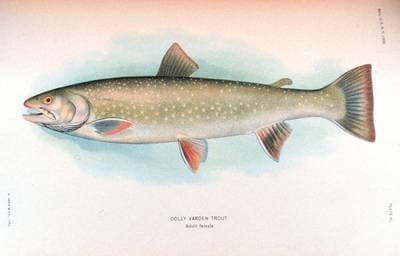
Least Concern
European cisco
Coregonus albula
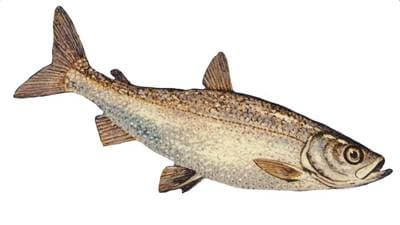
The European cisco is an elegant small whitefish belonging to the salmon family. With its streamlined body and silvery scales, it is perfectly adapted for life in the clear lakes of Northern Europe.
Motopark (Public domain)
Learn together
Use this page to talk about conservation, habitat, and why each species matters.
Quick facts
Perfect for kids and families
⚖️Weight
10–150 g
⏳Lifespan
3–10 yrs
🍽️Diet
Omnivore
🛡️Status
Least Concern
Mini challenge
What does European cisco usually eat?
Try together before you keep scrolling
Pick an answer
Weight
10–150 g
Length
8–35 cm
Lifespan
3–10 yrs
Diet
Omnivore
Listen to this species
Ljud
Distribution map
Utbredning
Adventure step • Meet the species
Overview
The European cisco is an elegant small whitefish belonging to the salmon family. With its streamlined body and silvery scales, it is perfectly adapted for life in the clear lakes of Northern Europe. The cisco typically reaches 15-25 cm in length, but in favorable conditions can grow up to 35 cm. The body is slender and elongated with a distinctly protruding lower jaw, meaning the lower jaw extends further than the upper jaw. This is an important identifying feature that distinguishes the cisco from other whitefish species. The back has a blue-green or gray-green tone while the sides and belly are silvery white. This fish has a fascinating life cycle closely linked to the seasonal rhythm of Nordic lakes. The cisco lives primarily in large, clear, and nutrient-poor lakes where it spends the summer months in the cool depths. It is a planktivore that filters small crustaceans and other microscopic organisms from the water with its closely-set gill rakers. During the bright summer nights, large schools of cisco can sometimes be seen hunting plankton at the surface, creating small rings on the water. Spawning is a dramatic spectacle that takes place in October-December when water temperatures have dropped to 2-6 degrees Celsius. Thousands of cisco gather over shallow water, often at sandbanks or shallow bays at depths of 1-10 meters. Females lay between 1,000 and 5,000 small eggs (about 1-2 mm in diameter) that stick to the bottom. Neither parent guards the eggs; instead, they are left to develop on their own through the cold winter. The fry hatch in April-May when the water begins to warm. The European cisco has great cultural and economic significance in the Nordic region. In Finland and northern Sweden, it has traditionally been an important food source, and smoked cisco remains a delicacy. The fish is also important as a food source for predatory fish such as pike, pikeperch, and burbot, as well as for terns and other fish-eating birds. Thanks to its abundant occurrence in many lakes, the cisco is a keystone species in Nordic freshwater ecosystems.
Adventure step • Where it lives
Habitat
LakeWetland
The European cisco thrives best in large, clear, and nutrient-poor lakes with cold water. It is common throughout Scandinavia and Finland, especially in lakes formed after the retreat of the inland ice. Typical cisco lakes are deep, have sandy or gravel bottoms, and a water temperature that rarely exceeds 20 degrees even in summer. During summer, the cisco often stays at depths of 10-30 meters where the temperature is comfortable and oxygen levels are good. In winter, cisco are often found at shallower depths, and during the spawning period they seek out shallow water. The cisco has also adapted to brackish water and occurs in the Baltic Sea's archipelagos and bays, particularly in the Gulf of Bothnia. It is sensitive to water pollution and acidification, which makes it function as an indicator of good water quality. In lakes with good cisco populations, you can be sure that the water is of high quality.
Adventure step • Through the seasons
Seasonal Behavior
The cisco's life follows a clear seasonal pattern. During spring and early summer, after the fry have hatched, young cisco grow rapidly in the plankton-rich water. Adults spend the summer at greater depths where temperatures are more comfortable, coming up toward the surface mainly during bright nights to feed. As autumn approaches and the water cools, cisco begin preparing for spawning which occurs in October-December. After spawning, the fish are exhausted and many older individuals die. Winter is a resting time when cisco move less and wait for spring to come and the life cycle to begin again.
Adventure step • Family life
Breeding
Incubation
90 days
Offspring
1000–5000
Adventure step • Wild behavior
Behavior & Ecology
Activity Pattern
Diurnal
Social Behavior
The cisco is a pronounced schooling fish that almost always lives in large groups. Schools can contain thousands of individuals that move in coordination to protect themselves from predators and find food more efficiently.
Migration
Partial Migrant
Population
Stable population, locally very abundant in suitable lakes
Did you know?
Cisco can form enormous schools with thousands of individuals moving synchronously through the water!
During spawning, the water can literally boil with activity as hundreds of fish release eggs and milt simultaneously
The cisco's scientific species name 'albula' means 'little white fish' in Latin
In Finland, the cisco is called 'muikku' and is so popular that there are dedicated muikku festivals!
Cisco can survive in very oxygen-poor water by dramatically reducing their metabolism
An adult cisco can filter several liters of water per hour when feeding on plankton
Cisco have no teeth in their jaws but use their gill rakers as a fine-meshed net to catch plankton
In some lakes, cisco migrate vertically each day - down to the depths during the day and up toward the surface at night to feed
Adventure step • Scientific place
Taxonomy
KingdomAnimalia
ClassActinopterygii
OrderSalmoniformes
FamilySalmonidae
SpeciesCoregonus albula
No sources have been added yet.
Cite this page
Fun Wild Facts (2026) European cisco (Coregonus albula). https://www.funwildfacts.com/norden/fish/european-cisco [May 30, 2026]
Similar animals
Least Concern
🐟 Fish
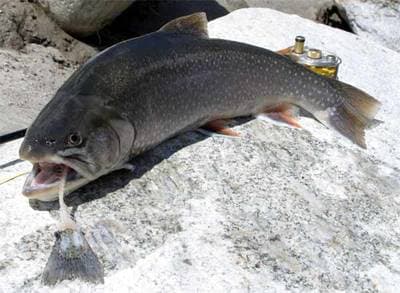
Arctic Charr
Salvelinus alpinus
0.1–15 kg
10–25 yrs
LakeRiverOcean+3
Least Concern
🐟 Fish
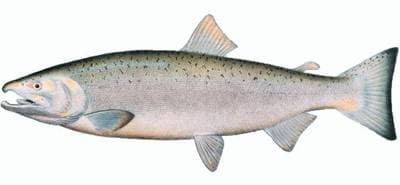
Coho Salmon
Oncorhynchus kisutch
2.5–16 kg
3–5 yrs
OceanRiverLake+1