Least ConcernSeabirds
South Polar Skua
Stercorarius maccormicki
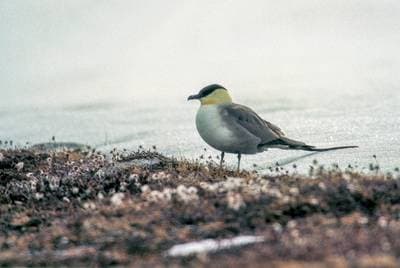
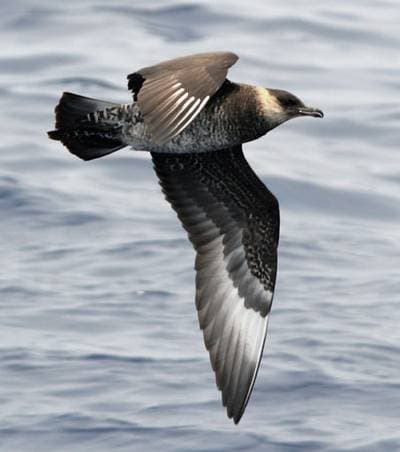
The South Polar Skua (Stercorarius maccormicki) is a robust and bold seabird that breeds on the Antarctic continent and winters in the North Pacific and North Atlantic Oceans. It occurs in three color morphs ranging from pale whitish-buff to dark brown, but is always identified by its distinctive white wing flash at the base of the primary feathers.
Алексей Логинов (CC BY 4.0)
Learn together
Use this page to talk about conservation, habitat, and why each species matters.
Quick facts
Perfect for kids and families
⚖️Weight
0.9–1.6 kg
⏳Lifespan
12–25 yrs
🍽️Diet
Omnivore
🛡️Status
Least Concern
Mini challenge
What does South Polar Skua usually eat?
Try together before you keep scrolling
Pick an answer
Weight
0.9–1.6 kg
Length
48–55 cm
Wingspan
1.3–1.4 m
Lifespan
12–25 yrs
Diet
Omnivore
Listen to this species
Ljud
Distribution map
Utbredning
Adventure step • Meet the species
Overview
The South Polar Skua (Stercorarius maccormicki) is a robust and bold seabird that breeds on the Antarctic continent and winters in the North Pacific and North Atlantic Oceans. It occurs in three color morphs ranging from pale whitish-buff to dark brown, but is always identified by its distinctive white wing flash at the base of the primary feathers. It is a highly opportunistic predator and kleptoparasite, known for stealing food from other seabirds such as penguins, petrels, and albatrosses. During the breeding season it aggressively defends its territory, dive-bombing any intruder including human researchers. Outside the breeding season it leads a highly pelagic existence far from land across the world's oceans.
Adventure step • Where it lives
Habitat
OceanCoasticeTundra
The South Polar Skua breeds on ice-free coastal plains, rocky shores, and tundra habitats around the entire Antarctic continent, often in close proximity to penguin colonies. During the non-breeding season it inhabits open ocean environments across the Northern Hemisphere, ranging from subtropical to subarctic waters.
Adventure step • Through the seasons
Seasonal Behavior
Breeding takes place during the austral summer from November to March, when pairs nest on the Antarctic mainland and surrounding islands. After the breeding season the species undertakes one of the longest migrations of any bird, traveling to the Arctic and North Pacific Ocean for the boreal summer.
Adventure step • Family life
Breeding
Incubation
27 days
Offspring
1–2
Adventure step • Wild behavior
Behavior & Ecology
Activity Pattern
Diurnal
Social Behavior
South Polar Skuas are largely solitary at sea but form loose, dispersed colonies during the breeding season. Pairs are monogamous and often reunite in successive seasons, with both parents sharing incubation duties and chick rearing.
Migration
Migratory
Population
The global breeding population is estimated at approximately 15,000 to 20,000 pairs, with important concentrations around the Ross Sea and the Antarctic Peninsula.
Did you know?
The South Polar Skua performs one of the longest migrations of any bird species, traveling up to 14,000 km or more between Antarctica and the Arctic each year.
It is one of only a handful of bird species ever recorded at the geographic South Pole, reportedly sighted there by early explorers including members of Robert Falcon Scott's expedition.
The species occurs in three distinct color morphs, pale, intermediate, and dark, making field identification challenging and sometimes confusing even for experienced ornithologists.
South Polar Skuas are known to hybridize with Brown Skuas where their ranges overlap, producing fertile offspring that complicate species boundaries and taxonomic classification.
Adventure step • Scientific place
Taxonomy
KingdomAnimalia
ClassAves
OrderCharadriiformes
FamilyStercorariidae
SpeciesStercorarius maccormicki
No sources have been added yet.
Cite this page
Fun Wild Facts (2026) South Polar Skua (Stercorarius maccormicki). https://www.funwildfacts.com/norden/bird/south-polar-skua [February 26, 2026]
Similar animals
Least Concern
🦅 Seabirds
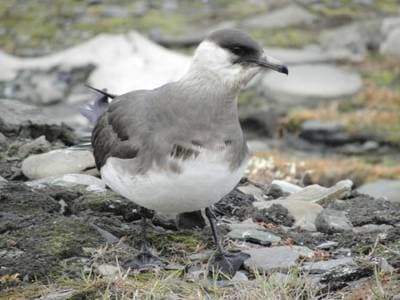
Arctic Skua
Stercorarius parasiticus
0.33–0.57 kg
8–12 yrs
TundraCoastOcean+2
Least Concern
🦅 Birds
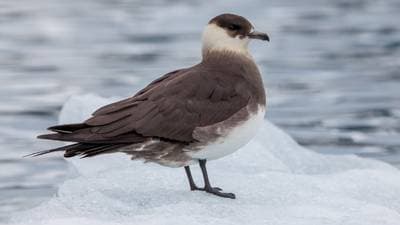
Great Skua
Stercorarius skua
1.2–2 kg
15–30 yrs
CoastOceanTundra+2