Least Concern
Garden Dormouse
Eliomys quercinus
The Garden Dormouse is a charming small rodent with a highly distinctive appearance that makes it easy to identify. It features a black mask across its eyes that gives it the look of a tiny bandit, and large rounded ears that protrude from its head.
Arno Laurent (CC BY-SA 3.0)
Learn together
Use this page to talk about conservation, habitat, and why each species matters.
Quick facts
Perfect for kids and families
⚖️Weight
60–140 g
⏳Lifespan
3–5 yrs
🍽️Diet
Herbivore
🛡️Status
Least Concern
Mini challenge
What does Garden Dormouse usually eat?
Try together before you keep scrolling
Pick an answer
Weight
60–140 g
Length
10–17 cm
Lifespan
3–5 yrs
Diet
Herbivore
Listen to this species
Ljud
Distribution map
Utbredning
Adventure step • Meet the species
Overview
The Garden Dormouse is a charming small rodent with a highly distinctive appearance that makes it easy to identify. It features a black mask across its eyes that gives it the look of a tiny bandit, and large rounded ears that protrude from its head. The fur is reddish-brown or greyish-brown on the upper side while the belly is light cream-colored. The bushy tail is long, often longer than the body, and has a distinct black-and-white pattern with a white tuft at the tip. This nocturnal rodent is a skilled climber that spends much time in trees and bushes. Despite what its name suggests, it doesn't live exclusively in gardens but actually prefers rocky areas, cliffs, and mountainous terrain with sparse forests. The Garden Dormouse is an omnivore with a varied diet consisting of insects, slugs, birds and bird eggs, as well as seeds, nuts, berries, and fruits. It is actually more carnivorous than many other dormice and can even attack prey almost as large as itself. A fascinating characteristic of the Garden Dormouse is its ability to hibernate during winter months. From October to April, it drastically lowers its body temperature and survives on body fat accumulated during summer and autumn. During this time, it may wake periodically to eat from its caches or to change sleeping locations. Hibernation is a survival strategy that allows it to endure periods when food is scarce. Unfortunately, the Garden Dormouse has declined dramatically in numbers across large parts of Europe in recent decades. The cause of the decline is not fully understood, but habitat loss, use of pesticides, and climate change are all believed to play a role. In some countries, the species is now threatened or nearly extinct from areas where it was previously common. Research is ongoing to better understand the species' needs and how to protect it.
Adventure step • Where it lives
Habitat
ForestWoodlandGardenRocky CliffsHeathlandFarmland
The Garden Dormouse thrives in a mosaic of different habitats where rocky elements combine with trees and bushes. It prefers mountainous terrain, rock formations, and stone walls where it can find protected crevices and cavities for its nests. It is often found in sparse deciduous and coniferous forests, forest edges, parks, and old gardens with old stone architecture. It is most common in areas between 200 and 1,400 meters elevation, but can occur both lower and higher. The species' habitat extends from the Iberian Peninsula in the west through Central and Eastern Europe to Russia, and southward to North Africa. In northern Europe it is rare and has disappeared from many areas. The Garden Dormouse is flexible and can adapt to different environments as long as there are sufficient hiding places, climbing opportunities, and access to varied food. Old orchards with stone walls constitute ideal habitats where it can find both insects, fruits, and protected nesting sites.
Adventure step • Through the seasons
Seasonal Behavior
The Garden Dormouse is active from April to October, with peak activity during summer months. During this time it builds up its fat reserves for the long winter hibernation. The mating season usually occurs in May-June after the animals have awakened from hibernation, and young are born after approximately 23 days of gestation. The female may have a second litter later in summer if conditions are favorable. From October it hibernates in a well-insulated nest, often in a tree hole, under roots, or in rock crevices. During winter months it may wake periodically during milder periods, but is mostly inactive until spring arrives.
Adventure step • Family life
Breeding
Gestation
23 days
Offspring
2–7
Adventure step • Wild behavior
Behavior & Ecology
Activity Pattern
Nocturnal
Social Behavior
The Garden Dormouse is mainly solitary and territorial, especially males who defend their territories aggressively against other males. Females and their young may be seen together, but adult individuals normally avoid each other outside the breeding season.
Migration
Resident
Population
Unknown, but declining sharply across much of Europe
Did you know?
The Garden Dormouse looks like a tiny bandit with its black mask across the eyes!
It can produce at least 10 different vocalizations to communicate, including whistles and chattering sounds.
Unlike other dormice, the Garden Dormouse is a skilled hunter that can catch and eat small birds.
During hibernation, its heart rate drops from about 300 beats per minute to just 2-10 beats per minute.
If a Garden Dormouse loses its tail, it can grow back, but it never regains its beautiful black-and-white coloring.
It can jump up to 2 meters between branches thanks to its powerful hind legs.
The Garden Dormouse has special vibrissae (whiskers) on both its face and forelegs that help it navigate in darkness.
A Garden Dormouse can eat up to 40% of its body weight in a single night when preparing for winter hibernation!
Adventure step • Scientific place
Taxonomy
KingdomAnimalia
ClassMammalia
OrderRodentia
FamilyGliridae
SpeciesEliomys quercinus
No sources have been added yet.
Cite this page
Fun Wild Facts (2026) Garden Dormouse (Eliomys quercinus). https://www.funwildfacts.com/europa/mammal/garden-dormouse [May 30, 2026]
Similar animals
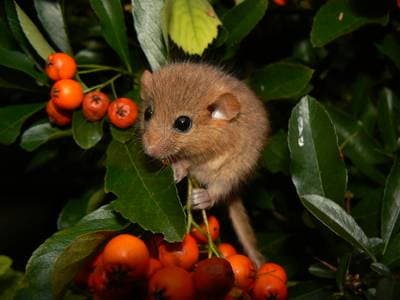
Least Concern
🦬 Mammals
Hazel Dormouse
Muscardinus avellanarius
15–40 g
3–5 yrs
ForestWoodlandHeathland+2
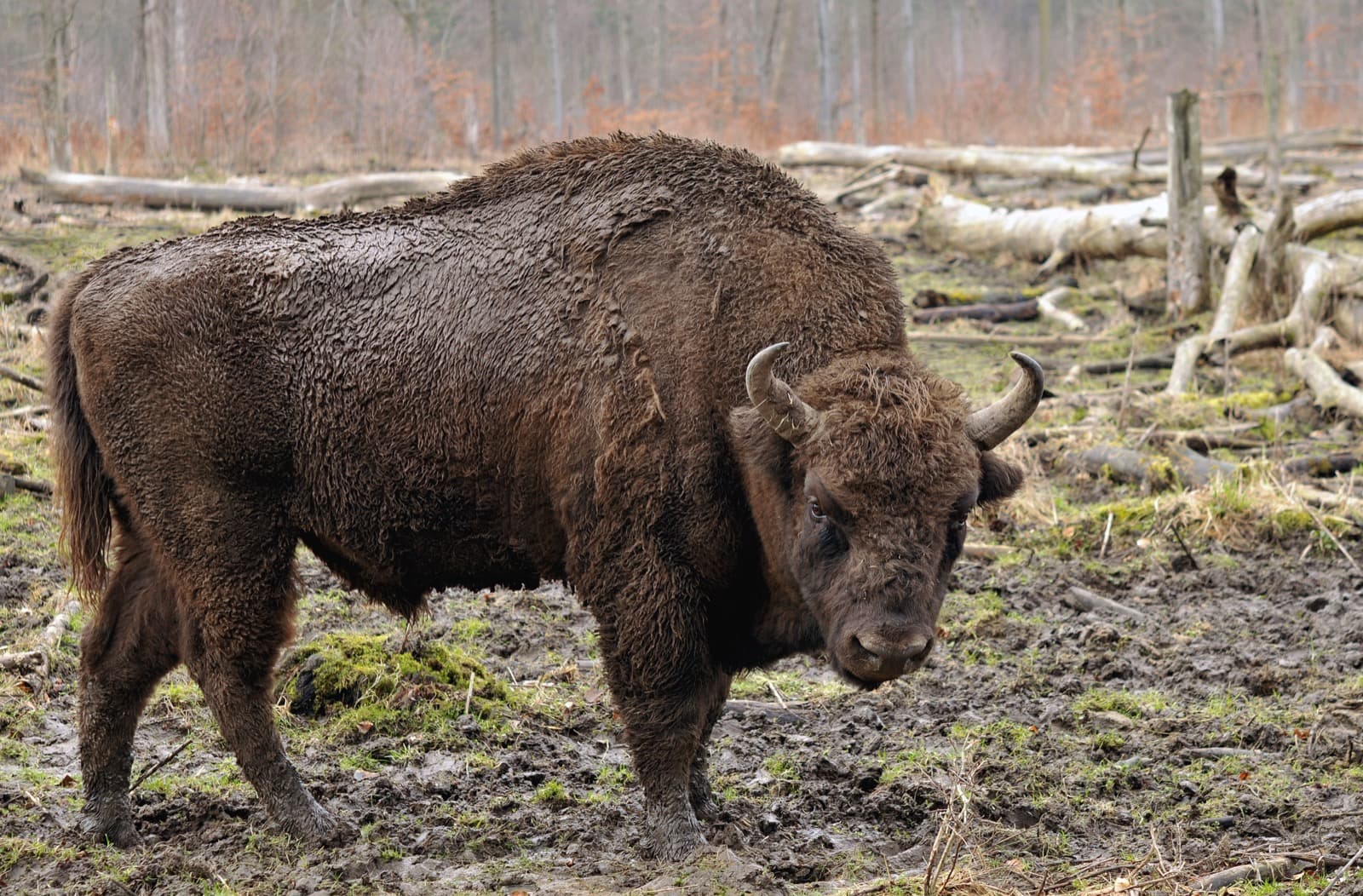
Near Threatened
🦬 Ungulates
European Bison
Bison bonasus
300–920 kg
15–25 yrs
ForestWoodlandGrassland