Least Concern
Moor Macaque
Macaca maura
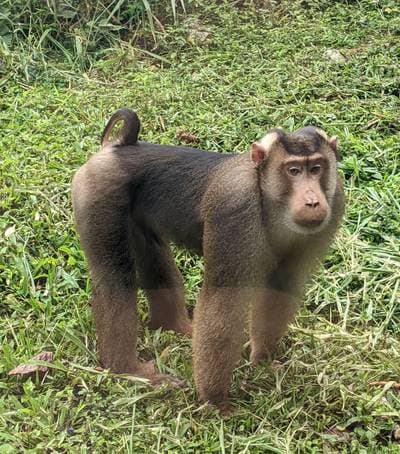
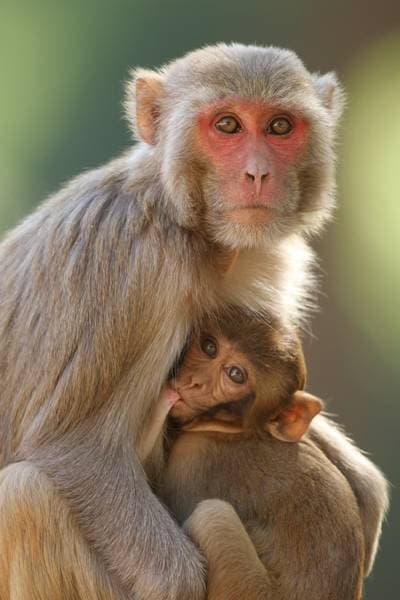
The Moor macaque is a fascinating primate found exclusively on the Indonesian island of Sulawesi. With its dark brown to black fur and characteristic pink or reddish face, it ranks among the most charismatic monkeys of Southeast Asia.
Learn together
Use this page to talk about conservation, habitat, and why each species matters.
Quick facts
Perfect for kids and families
⚖️Weight
5.5–10 kg
⏳Lifespan
18–30 yrs
🍽️Diet
Omnivore
🛡️Status
Least Concern
Mini challenge
What does Moor Macaque usually eat?
Try together before you keep scrolling
Pick an answer
Weight
5.5–10 kg
Length
50–70 cm
Lifespan
18–30 yrs
Diet
Omnivore
Listen to this species
Ljud
Distribution map
Utbredning
Adventure step • Meet the species
Overview
The Moor macaque is a fascinating primate found exclusively on the Indonesian island of Sulawesi. With its dark brown to black fur and characteristic pink or reddish face, it ranks among the most charismatic monkeys of Southeast Asia. This medium-sized macaque reaches a body length of 50-70 centimeters and weighs between 5.5 and 10 kilograms, with males being considerably larger than females. It has virtually no tail, which is unusual among macaque species and makes it easily recognizable. These intelligent animals inhabit dense rainforests and mountainous areas at elevations up to 2000 meters above sea level. The Moor macaque is omnivorous with a varied diet that includes fruits, leaves, insects, spiders, and occasionally small animals. They have evolved specialized cheek pouches where they can store food during foraging, later sitting down in a safe location to eat at leisure. Their strong jaws and sharp teeth make them adept at cracking hard nuts and seeds. Socially, the Moor macaque is highly complex. They live in groups of 5-25 individuals with a strict hierarchy where females typically remain in their birth group for life while young males leave upon reaching sexual maturity. Communication occurs through a rich spectrum of vocalizations, facial expressions, and body language. Mutual grooming is central to strengthening social bonds and reducing tensions within the group. Unfortunately, the Moor macaque is classified as Critically Endangered according to the IUCN Red List. Habitat loss through deforestation and agricultural expansion poses the greatest threat, along with hunting for meat and capture for illegal wildlife trade. Conservation efforts focus on protecting remaining rainforest areas and working with local communities to reduce human-monkey conflicts.
Adventure step • Where it lives
Habitat
RainforestForestMountain
The Moor macaque is endemic to the southwestern part of the Indonesian island of Sulawesi, where it inhabits tropical rainforests and montane forests. They prefer primary and secondary rainforest with dense canopy cover and abundant vegetation, but can also adapt to disturbed forest areas and forest edges near agricultural land. These monkeys are found at elevations from lowlands up to approximately 2000 meters above sea level, where they utilize all forest strata from ground level to the tree canopy. Their home ranges vary in size depending on food availability and group size, but a typical group moves across an area of several square kilometers. They prefer areas with good access to fruit-bearing trees and water sources. Moor macaques depend on intact forest habitat for their survival, and fragmentation of their living environment poses a serious threat to populations.
Adventure step • Through the seasons
Seasonal Behavior
On Sulawesi near the equator, the Moor macaque experiences less seasonal variation than many other primates. The region has a tropical climate with year-round rainfall, although there are periods with more intense rains. During wetter periods when fruit is abundant, group activity and foraging ranges increase. During drier months when certain fruits are less available, they adapt their diet to include more leaves, bark, and insects. Mating occurs year-round but with some increase during certain months, and after a gestation period of approximately 5-6 months, usually one infant is born. Infant survival is higher during periods of good food availability.
Adventure step • Family life
Breeding
Gestation
174 days
Offspring
1–1
Adventure step • Wild behavior
Behavior & Ecology
Activity Pattern
Diurnal
Social Behavior
Lives in groups of 5-25 individuals with matrilineal structures where females form the core group and males migrate between groups.
Migration
Resident
Population
Estimated 4,000-6,000 individuals in the wild
Did you know?
The Moor macaque has an almost completely black face that contrasts beautifully with their dark brown fur!
They can store food in their cheek pouches – like built-in shopping bags – and eat later when they feel safe.
These monkeys are excellent climbers and spend most of the day in trees, but often come down to the ground to forage.
Moor macaques have a special call that sounds almost like laughter when they play or are happy!
Females in the group often help each other care for their babies, like a big family daycare.
They can recognize themselves in mirrors, which shows how intelligent they are!
Moor macaques sometimes wash their food in water before eating it, just like raccoons!
Despite being active during the day, they enjoy taking long midday naps in the shade during the hottest hours.
Adventure step • Scientific place
Taxonomy
KingdomAnimalia
ClassMammalia
OrderPrimates
FamilyCercopithecidae
SpeciesMacaca maura
No sources have been added yet.
Cite this page
Fun Wild Facts (2026) Moor Macaque (Macaca maura). https://www.funwildfacts.com/asien/mammal/moor-macaque [May 30, 2026]
Similar animals
Least Concern
🦬 Mammals
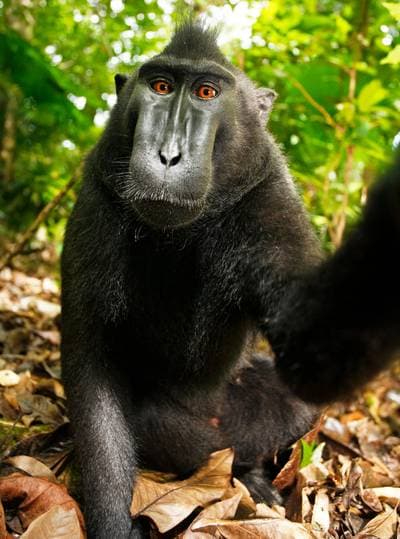
Celebes Crested Macaque
Macaca nigra
4.5–10 kg
15–20 yrs
RainforestForestMountain
Least Concern
🦬 Mammals
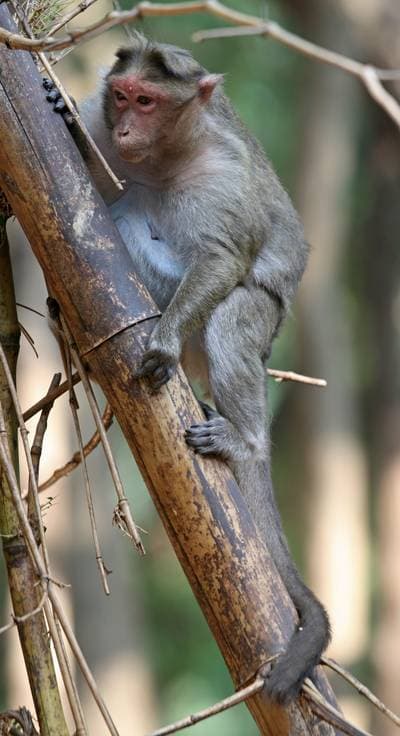
Cynomolgus Macaque
Macaca fascicularis
3–8.3 kg
15–37 yrs
RainforestForestMangrove+2