Least Concern
Axis Deer
Axis axis
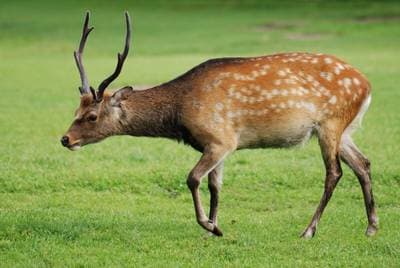
The axis deer, also known as the chital or spotted deer, is a medium-sized deer renowned for its beautiful coat of white spots that remain throughout its entire life. Unlike many other deer species that lose their spots as they mature, the axis deer retains its distinctive pattern year-round, making it one of the most easily recognizable deer species in the world.
Chinmayisk (CC BY-SA 3.0)
Learn together
Use this page to talk about conservation, habitat, and why each species matters.
Quick facts
Perfect for kids and families
⚖️Weight
30–110 kg
⏳Lifespan
8–20 yrs
🍽️Diet
Herbivore
⚡Top speed
65 km/h
Mini challenge
What does Axis Deer usually eat?
Try together before you keep scrolling
Pick an answer
Weight
30–110 kg
Length
1.1–1.5 m
Height
65–95 cm
Top Speed
65 km/h
Lifespan
8–20 yrs
Diet
Herbivore
Listen to this species
Ljud
Distribution map
Utbredning
Adventure step • Meet the species
Overview
The axis deer, also known as the chital or spotted deer, is a medium-sized deer renowned for its beautiful coat of white spots that remain throughout its entire life. Unlike many other deer species that lose their spots as they mature, the axis deer retains its distinctive pattern year-round, making it one of the most easily recognizable deer species in the world. The coat is golden-brown to reddish-brown with rows of white spots along the sides and a dark dorsal stripe. The belly and inner legs are white or cream-colored. Males, called bucks, have impressive antlers that can grow up to 100 centimeters long and typically have three points per side. Originally native to the Indian subcontinent, primarily India, Sri Lanka, and Nepal, the axis deer has been introduced to many other parts of the world including Australia, Hawaii, Texas, and Argentina. In its natural habitat, the axis deer prefers mixed forests, open woodland glades, and grasslands near water sources. They are excellent swimmers and do not hesitate to cross rivers and lakes. The axis deer is particularly abundant in India's national parks and wildlife sanctuaries, where they are often seen in large herds grazing on grass and leaves. The axis deer has developed a fascinating symbiotic relationship with gray langurs in India. The monkeys often sit high in trees and warn of dangers, while the deer with their excellent hearing and sense of smell complement the monkey's good vision from the trees. Together they form an effective warning system against predators such as tigers, leopards, and dholes (Asiatic wild dogs). The axis deer communicates through various calls - females and calves bleat softly to each other, while alarm signals are sharp, piercing whistle-like sounds that warn the entire herd. Although the axis deer is relatively common in its natural range, some local populations have declined due to habitat loss and hunting. In India, the species is protected in national parks and is considered near threatened in certain regions. However, introduced populations in other countries have flourished so dramatically that in some cases they are considered invasive species competing with native fauna. The axis deer plays an important ecological role as prey for large predators and as grazers that shape the vegetation in their environment.
Adventure step • Where it lives
Habitat
ForestWoodlandGrasslandSavanna
The axis deer thrives best in semi-open landscapes where forest and grasslands meet. They prefer deciduous forests, bamboo thickets, and grasslands with scattered tree vegetation where they can graze in the open but quickly take shelter among trees when danger threatens. Access to water is crucial - axis deer are often seen near rivers, ponds, and lakes where they both drink and bathe, especially during hot months. In India, they often live in teak and sal forests as well as in dry deciduous forests with clearings. In their natural home in India and Sri Lanka, axis deer are found from the coast up to about 1000 meters elevation in mountainous areas. They avoid dense rainforest and completely open plains, instead seeking places with variation in vegetation. During the hottest hours of the day, they rest in shade under trees or in dense vegetation, becoming active in the morning and evening when they graze on grass, herbs, fruit, and young shoots. Human impact has significantly shaped their habitat - many populations now live near agricultural land where they can damage crops, creating conflicts with farmers.
Adventure step • Through the seasons
Seasonal Behavior
Unlike many deer species living in temperate climates, the axis deer in its natural tropical and subtropical habitat has no strict seasonal breeding cycle. Mating and births can occur year-round, although there are often peaks coinciding with the beginning of the monsoon period when food is most abundant. In areas with more distinct seasons, however, certain patterns may develop. Antler shedding in males does not occur synchronously but can happen at any time during the year, although many bucks shed their antlers shortly after the breeding period. During the monsoon period when vegetation is lush and green, axis deer are in their best condition with glossy coats. During the dry season, they may be forced to travel longer distances to find water and fresh vegetation.
Adventure step • Family life
Breeding
Gestation
210 days
Offspring
1–2
Adventure step • Wild behavior
Behavior & Ecology
Activity Pattern
Crepuscular
Social Behavior
The axis deer is a social animal living in sex-segregated herds - females and calves form groups of 5-30 individuals, while males are often solitary or form bachelor groups.
Migration
Resident
Population
Estimated 150,000-200,000 individuals in the wild, primarily in India and Sri Lanka
Did you know?
Axis deer keep their white spots their entire lives - unlike most deer species that lose their spots when they become adults!
Males can grow antlers when they are just seven months old, which is much earlier than most other deer species.
They can jump over 2-meter-high fences and sprint at speeds up to 65 kilometers per hour when fleeing from predators.
Axis deer have a unique ability to give birth year-round in their natural habitat, which is unusual for deer that typically have a specific breeding season.
They cooperate with gray langurs in the forest - the monkeys warn of dangers from above while the deer listen and smell for threats on the ground!
An axis deer's alarm call is a high-pitched, whistling sound that can be heard over a hundred meters away and warns all animals nearby of danger.
Fawns can stand and walk just minutes after birth, but spend their first days of life hidden in dense grass where mother visits them to nurse.
The axis deer is an excellent swimmer and willingly swims across rivers to reach new grazing areas or to escape from predators.
Adventure step • Scientific place
Taxonomy
KingdomAnimalia
ClassMammalia
OrderArtiodactyla
FamilyCervidae
SpeciesAxis axis
No sources have been added yet.
Cite this page
Fun Wild Facts (2026) Axis Deer (Axis axis). https://www.funwildfacts.com/asien/mammal/axis-deer [May 30, 2026]
Similar animals
Least Concern
🦬 Mammals
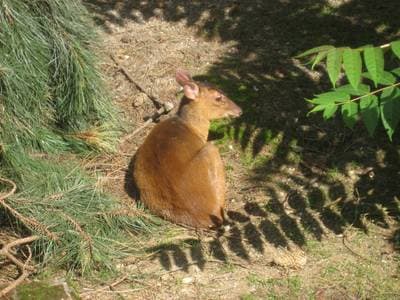
Chinese Muntjac
Muntiacus reevesi
10–18 kg
10–16 yrs
ForestWoodlandGrassland+2
Least Concern
🦬 Mammals
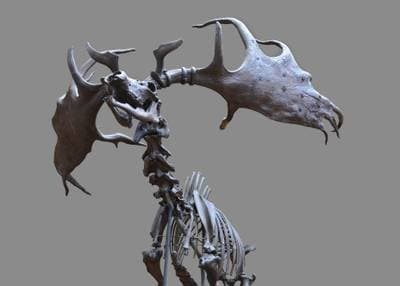
Irish Elk
Megaloceros giganteus
400–700 kg
10–15 yrs
GrasslandWoodlandTundra+1