Least Concern
False Killer Whale
Pseudorca crassidens
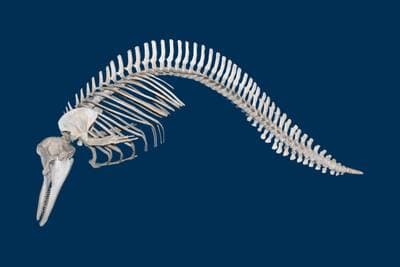
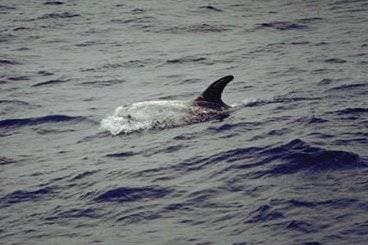
The false killer whale is a large and powerful dolphin that, despite its name, is not a true killer whale but belongs to its own distinct genus. The name comes from its superficial resemblance to the orca, but the false killer whale is more slender and completely black without the white markings that characterize true killer whales.
Learn together
Use this page to talk about conservation, habitat, and why each species matters.
Quick facts
Perfect for kids and families
⚖️Weight
1100–2200 kg
⏳Lifespan
50–63 yrs
🍽️Diet
Carnivore
⚡Top speed
35 km/h
Mini challenge
What does False Killer Whale usually eat?
Try together before you keep scrolling
Pick an answer
Weight
1100–2200 kg
Length
4.3–6.1 m
Top Speed
35 km/h
Lifespan
50–63 yrs
Diet
Carnivore
Listen to this species
Ljud
Distribution map
Utbredning
Adventure step • Meet the species
Overview
The false killer whale is a large and powerful dolphin that, despite its name, is not a true killer whale but belongs to its own distinct genus. The name comes from its superficial resemblance to the orca, but the false killer whale is more slender and completely black without the white markings that characterize true killer whales. It has a characteristic rounded head with a prominent melon and a narrow, forward-curving upper jaw. The body is elongated and elegant with a relatively small dorsal fin positioned midway along the back. These marine mammals are known for their intelligence and complex social structures. They live in stable family groups where members maintain strong bonds throughout their lives. The false killer whale is one of the fastest swimmers among dolphins and can reach speeds of up to 35 kilometers per hour. They are also skilled divers that can hold their breath for up to 15 minutes and dive to depths exceeding 500 meters when hunting squid and large fish. The false killer whale has a varied repertoire of sounds for communication, including whistles, clicks, and pulsed calls. These sounds are used both for echolocation when hunting and for social interaction with pod members. They are very playful animals often observed bow-riding with ships and leaping high out of the water. Unfortunately, the species has sometimes been involved in mass strandings where entire pods can beach themselves simultaneously, likely due to their strong social bonds where individuals follow their pod mates even to death. Today, the false killer whale is classified as Near Threatened by the IUCN due to declining numbers in certain areas. The main threats include bycatch in fishing nets, loss of prey due to overfishing, ocean pollution with heavy metals and plastics, and noise from ships that disrupts their communication and echolocation. Climate change also affects their distribution and access to food.
Adventure step • Where it lives
Habitat
OceanCoast
The false killer whale prefers deep, tropical and subtropical waters around the world. They typically inhabit oceanic zones far from land, but can also come closer to coasts in areas with steep continental shelves where deep water is near the shore. They are most commonly found in water temperatures between 10 and 30 degrees Celsius, though they prefer warmer waters. The species has a global distribution and occurs in the Pacific, Atlantic, and Indian Oceans, but they are not evenly distributed and occur in distinct populations. They avoid polar waters and are rarely found in cold northern or southern regions. False killer whales often follow deep-sea currents and prefer areas with abundant squid and large pelagic fish such as tuna and dolphins.
Adventure step • Through the seasons
Seasonal Behavior
The false killer whale does not have a clear seasonal migration pattern like many whales, but they move between different areas based on food availability and water temperature. In some regions, they may be observed closer to shore during specific seasons when their prey migrates. Reproduction appears to occur at different times of the year depending on geographic location, but in many areas, calves are born primarily during spring and summer. Females typically give birth to one calf every four to six years after a gestation period of approximately 15 months. The calf nurses for up to two years, which is unusually long among dolphins.
Adventure step • Family life
Breeding
Gestation
456 days
Offspring
1–1
Adventure step • Wild behavior
Behavior & Ecology
Activity Pattern
Diurnal
Social Behavior
Lives in tightly-knit pods of 10-50 individuals that are often family groups, but can sometimes gather in super-pods of several hundred animals. They exhibit strong social cohesion and assist sick or injured group members.
Migration
Partial Migrant
Population
The global population is estimated at fewer than 60,000 individuals, with declining trends in several areas.
Did you know?
A false killer whale can weigh as much as 15 adult humans combined – up to 2,200 kilograms!
Their brain is actually larger than a human's and they are considered among the most intelligent animals in the ocean.
They can leap up to 5 meters high out of the water – that's higher than a two-story house!
False killer whales have been observed sharing food with each other and even with other dolphin species, which is very unusual in the animal kingdom.
They have between 44 and 48 large, conical teeth that are perfect for gripping large fish and squid.
A group of false killer whales can hunt together like a well-organized team and even attack large sharks and small whales.
They can swallow large fish whole without chewing – a false killer whale has been observed swallowing a 2-meter salmon in one gulp!
Calves are born with a lighter color than their parents and become darker as they grow up.
Adventure step • Scientific place
Taxonomy
KingdomAnimalia
ClassMammalia
OrderCetacea
FamilyDelphinidae
SpeciesPseudorca crassidens
No sources have been added yet.
Cite this page
Fun Wild Facts (2026) False Killer Whale (Pseudorca crassidens). https://www.funwildfacts.com/afrika/mammal/false-killer-whale [May 30, 2026]
Similar animals
Least Concern
🦬 Mammals
Atlantic spotted dolphin
Stenella frontalis
100–143 kg
25–30 yrs
OceanCoast
Least Concern
🦬 Mammals
Commerson's dolphin
Cephalorhynchus commersonii
35–86 kg
15–18 yrs
OceanCoast