Least Concern
Dromedary
Camelus dromedarius
The dromedary, also known as the Arabian camel, is one of the world's most remarkable mammals, perfectly adapted to life in some of Earth's most inhospitable environments. With its characteristic single-humped silhouette, this majestic desert dweller can weigh up to nearly 700 kilograms and reach a shoulder height of over two meters.
Jebulon (CC0)
Learn together
Use this page to talk about conservation, habitat, and why each species matters.
Quick facts
Perfect for kids and families
⚖️Weight
400–690 kg
⏳Lifespan
40–50 yrs
🍽️Diet
Herbivore
⚡Top speed
65 km/h
Mini challenge
What does Dromedary usually eat?
Try together before you keep scrolling
Pick an answer
Weight
400–690 kg
Length
2.2–3.4 m
Height
1.8–2.3 m
Top Speed
65 km/h
Lifespan
40–50 yrs
Diet
Herbivore
Listen to this species
Ljud
Distribution map
Utbredning
Adventure step • Meet the species
Overview
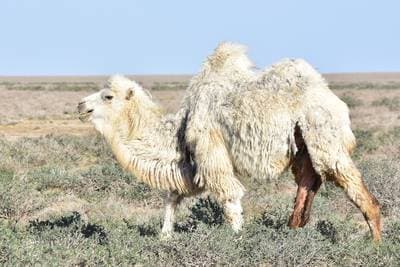
The dromedary, also known as the Arabian camel, is one of the world's most remarkable mammals, perfectly adapted to life in some of Earth's most inhospitable environments. With its characteristic single-humped silhouette, this majestic desert dweller can weigh up to nearly 700 kilograms and reach a shoulder height of over two meters. Unlike its two-humped relative, the Bactrian camel, the dromedary has only one hump that functions as an energy reserve filled with fat, not water as many people believe. What makes the dromedary truly unique is its fantastic adaptations to desert life. The animal's broad, soft hooves spread its weight across the sand and prevent it from sinking. The long eyelashes and hair in the ears protect against sandstorms, while the nostrils can close completely to keep sand out. The dromedary can also raise its body temperature by up to six degrees during the day to avoid sweating, which conserves precious fluids. When it finally gets access to water, it can drink up to 135 liters in just 13 minutes! The dromedary has been humanity's companion for over 4,000 years and was originally domesticated on the Arabian Peninsula. Today there are no wild dromedaries left; all are domesticated or feral. They have played a crucial role in trade and transport throughout history, and were not without reason called the "ships of the desert." In modern times, dromedaries are still used for transport, milk and meat production, and in competitive racing, particularly in countries around the Persian Gulf. Although the dromedary is so important to millions of people in arid regions, it is unknown in Scandinavia except at zoos and in stories. But in Australia there is the world's largest population of feral dromedaries – over 300,000 individuals descended from animals imported in the 1800s to help explore the continent's interior deserts.
Adventure step • Where it lives
Habitat
DesertGrasslandSavanna
The dromedary is at home in dry and desert environments across large parts of North Africa, the Middle East, and parts of Asia. They thrive in extremely hot and dry climates where temperatures can rise above 50 degrees Celsius during the day and drop dramatically at night. These fantastic animals can find food in areas where vegetation is sparse and consists of thorny bushes, dry grasses, and salty desert vegetation that few other animals can digest. Domesticated dromedaries are kept by nomadic peoples who move between grazing areas depending on season and rainfall. In modern times, there are also large feral populations in Australia's interior deserts, where they have adapted to living completely without human contact. Dromedaries can travel over enormous distances in their search for water and food, and their ability to navigate desert landscapes is impressive.
Adventure step • Through the seasons
Seasonal Behavior
Dromedaries are not affected by seasons in the same way as Scandinavian animals, as they live in areas where the climate is warm year-round. However, their reproduction often follows rainy seasons when more food is available. The mating season varies depending on geographic location, but typically females give birth to their young during cooler months when survival chances are highest. Gestation lasts about 13 months, and the newborn calf can stand and walk within a few hours. In areas with extremely hot summers, dromedaries may become less active during the hottest hours and seek shade, while becoming more active during morning and evening.
Adventure step • Family life
Breeding
Gestation
390 days
Offspring
1–1
Adventure step • Wild behavior
Behavior & Ecology
Activity Pattern
Diurnal
Social Behavior
Dromedaries live in groups led by a dominant male together with several females and their young.
Migration
Resident
Population
Approximately 14 million domesticated dromedaries globally, no wild populations remain
Did you know?
A dromedary can survive up to two weeks without water and several months without food thanks to the fat in its hump!
When a dromedary is thirsty and finally gets water, it can gulp down 135 liters in just a quarter hour – that's equivalent to about 900 glasses of water!
Dromedaries can run up to 65 kilometers per hour in short bursts, making them faster than most horses in desert sand.
A dromedary's hump can weigh up to 35 kilograms when fully filled with fat. When the dromedary uses the energy, the hump shrinks and can even hang to the side!
Dromedaries don't just spit when they're irritated – they can also vomit up green stomach contents and spray it at whoever is bothering them!
Dromedary milk contains three times more vitamin C than cow's milk and is highly nutritious. It's a staple food for many nomadic peoples in the desert.
Dromedaries have thick lips with rough skin that allow them to eat thorny desert plants that would injure most other animals' mouths.
In the United Arab Emirates, there are camel racing competitions where dromedaries compete on special tracks, and the most valuable racing camels can be worth millions of dollars!
Adventure step • Scientific place
Taxonomy
KingdomAnimalia
ClassMammalia
OrderArtiodactyla
FamilyCamelidae
SpeciesCamelus dromedarius
No sources have been added yet.
Cite this page
Fun Wild Facts (2026) Dromedary (Camelus dromedarius). https://www.funwildfacts.com/afrika/mammal/dromedary [May 30, 2026]