Least Concern
Nile tilapia
Oreochromis niloticus
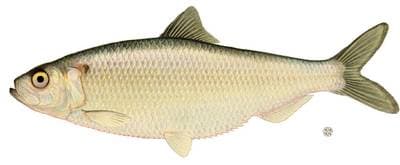
The Nile tilapia is a medium-sized freshwater fish originally native to Africa, particularly the Nile River basin and other major lake systems. This robust and adaptable fish has become one of the world's most important aquaculture species and is now farmed in over 100 countries.
W H Flower (Public domain)
Learn together
Use this page to talk about conservation, habitat, and why each species matters.
Quick facts
Perfect for kids and families
⚖️Weight
0.5–4.3 kg
⏳Lifespan
5–10 yrs
🍽️Diet
Omnivore
🛡️Status
Least Concern
Mini challenge
What does Nile tilapia usually eat?
Try together before you keep scrolling
Pick an answer
Weight
0.5–4.3 kg
Length
15–60 cm
Lifespan
5–10 yrs
Diet
Omnivore
Listen to this species
Ljud
Distribution map
Utbredning
Adventure step • Meet the species
Overview
The Nile tilapia is a medium-sized freshwater fish originally native to Africa, particularly the Nile River basin and other major lake systems. This robust and adaptable fish has become one of the world's most important aquaculture species and is now farmed in over 100 countries. The Nile tilapia has an oval, laterally compressed body with characteristic vertical stripes along its sides and can vary in color from silver-gray to golden-brown hues, depending on age and environment. The fish is known for its rapid growth and ability to survive in varying water quality and temperature conditions. It can grow up to 60 centimeters long and weigh over 4 kilograms, although most farmed specimens are harvested at weights between 500 grams and 1 kilogram. Nile tilapia has a characteristically large mouth and strong jaws used to gather both plant material and small animals. The body is covered with large, cycloid scales that give the fish a silvery, shimmering appearance. Nile tilapia is an omnivore that primarily feeds on algae, aquatic plants, insect larvae, and plankton. In nature, it plays an important role in the ecosystem by controlling algae growth and recycling nutrients. The fish thrives best in warm water between 20-30°C and is sensitive to temperatures below 10°C. It is also tolerant of varying oxygen levels and can survive in water of lower quality than many other fish species. This species has both positive and negative aspects from an environmental perspective. As a farmed fish, it is highly efficient and requires fewer resources than many other protein sources, making it important for global food security. However, in areas where it has been introduced outside its natural range, Nile tilapia can become invasive and outcompete native fish species. In Sweden and other Nordic countries, it occurs only in controlled farming facilities and aquariums.
Adventure step • Where it lives
Habitat
RiverLakeWetland
Nile tilapia occurs naturally in freshwater throughout much of Africa, particularly in the Nile River and its tributaries, as well as in many lakes including Lake Victoria, Lake Tanganyika, and Lake Kioga. The fish prefers shallow, warm water with abundant vegetation and soft bottoms where it can forage and build nests. It thrives in both still and slow-moving water and can survive in brackish water with some salinity. Today, Nile tilapia has been introduced to tropical and subtropical waterways worldwide, from Asia to South America and Oceania. In farming contexts, the fish is kept in ponds, tanks, and cage systems in both fresh and brackish water. It prefers temperatures above 20°C and vegetation or structures where it can seek shelter. Nile tilapia is highly adaptable and can survive in oxygen-poor environments thanks to its ability to utilize oxygen efficiently.
Adventure step • Through the seasons
Seasonal Behavior
In its natural habitat, Nile tilapia is most active during the warm season when water temperature is at its highest. Spawning typically occurs at the end of the rainy season when water temperature rises and conditions are optimal for fry survival. In tropical areas where temperature is constant, Nile tilapia can reproduce year-round. During cooler periods, activity and growth slow down, but the fish continues to forage. In farming settings, temperature is often controlled to maintain optimal growth and reproduction throughout the year.
Adventure step • Family life
Breeding
Incubation
3 days
Offspring
100–2000
Adventure step • Wild behavior
Behavior & Ecology
Activity Pattern
Diurnal
Social Behavior
Nile tilapia is territorial during breeding season when males aggressively defend their nests. Outside the reproductive period, the fish lives in loose schools, especially younger individuals that seek safety in numbers.
Migration
Resident
Population
Not assessed - one of the world's most farmed fish species with annual production exceeding 4 million tons
Did you know?
Nile tilapia was so important in ancient Egypt that it was depicted in hieroglyphics and considered a symbol of renewal and rebirth!
Males build large nests in the sand by excavating with their mouths - a single male can create a nest over one meter in diameter!
Females are mouthbrooders who care for eggs and newly hatched fry in their mouths for up to two weeks without eating anything themselves!
Nile tilapia can recognize their own offspring and other individuals through scent and visual signals!
Under perfect conditions, a Nile tilapia can reach sexual maturity at just 3-4 months of age and begin reproducing!
A single female Nile tilapia can produce up to 2,000 eggs per spawning season and can reproduce every six to eight weeks!
The fish can actually change its population sex ratio depending on temperature and density - warmer water produces more males!
Nile tilapia has an incredible ability to recover from injuries and can regrow lost scales and heal wounds very quickly!
Adventure step • Scientific place
Taxonomy
KingdomAnimalia
ClassActinopterygii
OrderPerciformes
FamilyCichlidae
SpeciesOreochromis niloticus
No sources have been added yet.
Cite this page
Fun Wild Facts (2026) Nile tilapia (Oreochromis niloticus). https://www.funwildfacts.com/afrika/fish/nile-tilapia [May 30, 2026]
Similar animals
Least Concern
🐟 Fish
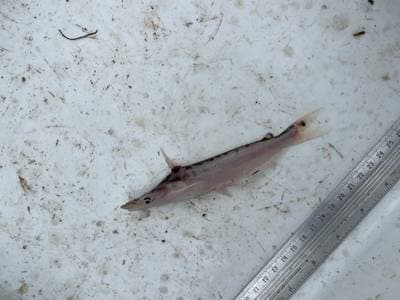
Ageneiosus pardalis
Ageneiosus pardalis
50–300 g
3–8 yrs
RiverWetlandRainforest
Least Concern
🐟 Fish
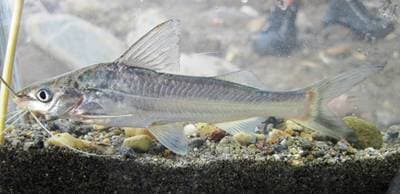
Bloch's Catfish
Pimelodus blochii
0.3–2.5 kg
5–10 yrs
RiverLakeWetland